What makes åkle remarkable is not only the colour or the craftsmanship. Each piece carries its own history. Across Norway, different regions developed their own patterns, weaving techniques and symbolic languages. Because of this, an åkle is more than a textile. It is something you can read.
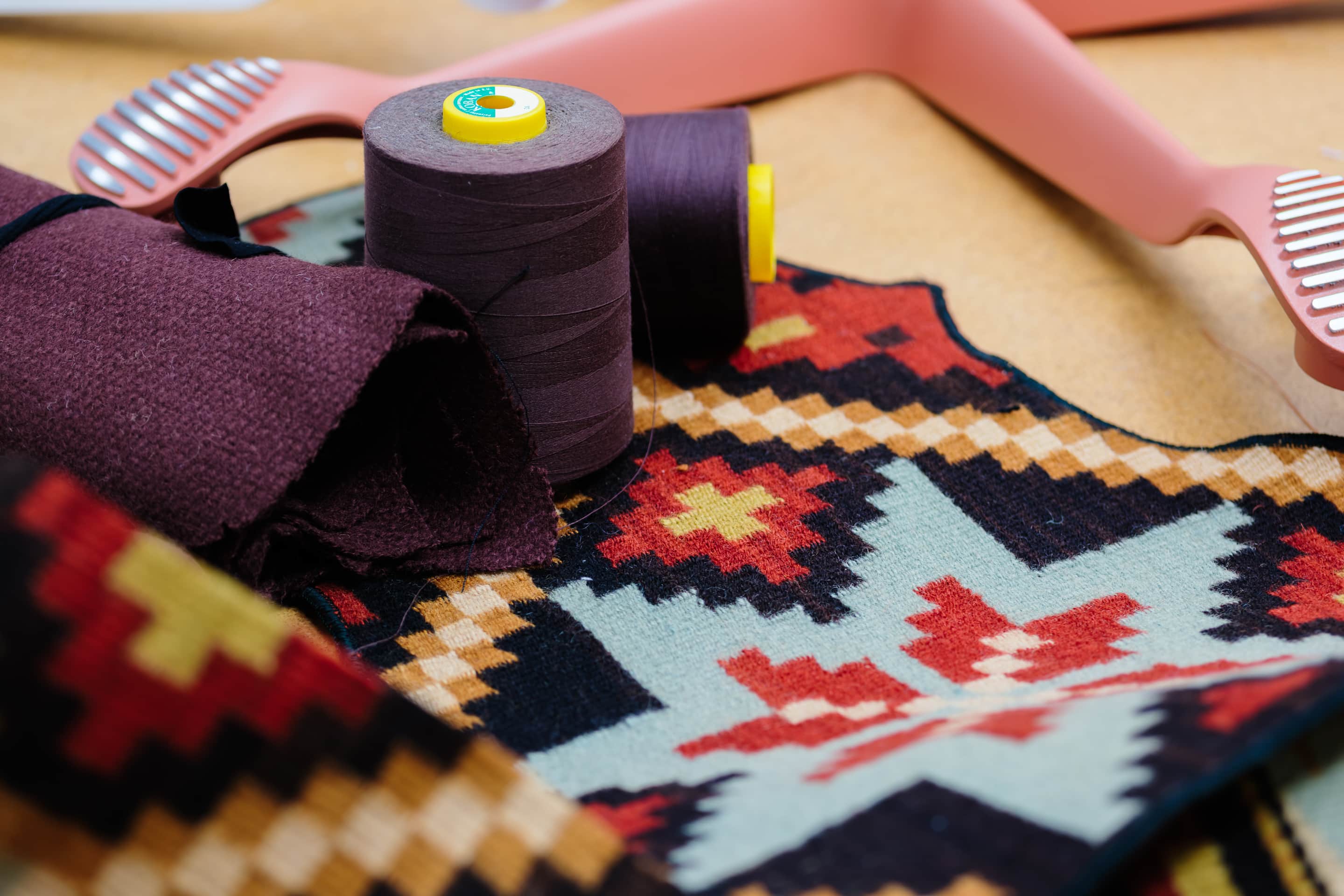
Experts can often identify where an åkle comes from simply by studying how it was made. The weave, the yarn, the motifs and even the colour combinations say something about the place it came from. Every region had its own visual style, shaped by the landscape, the traditions and the people who kept the craft alive. When an åkle is preserved, recovered or repurposed, you are not just looking at fabric. You are looking at traces of the homes it lived in, the people who made it, and the moments it witnessed.
Below are a few of the åkle stories connected to the textiles in the HÅG x Recouture collaboration project. This is what makes working with åkle so rewarding. Every pattern holds a clue, and every stitch carries a fragment of the past.
Bordeåkle: A tradition sustained by generations of women
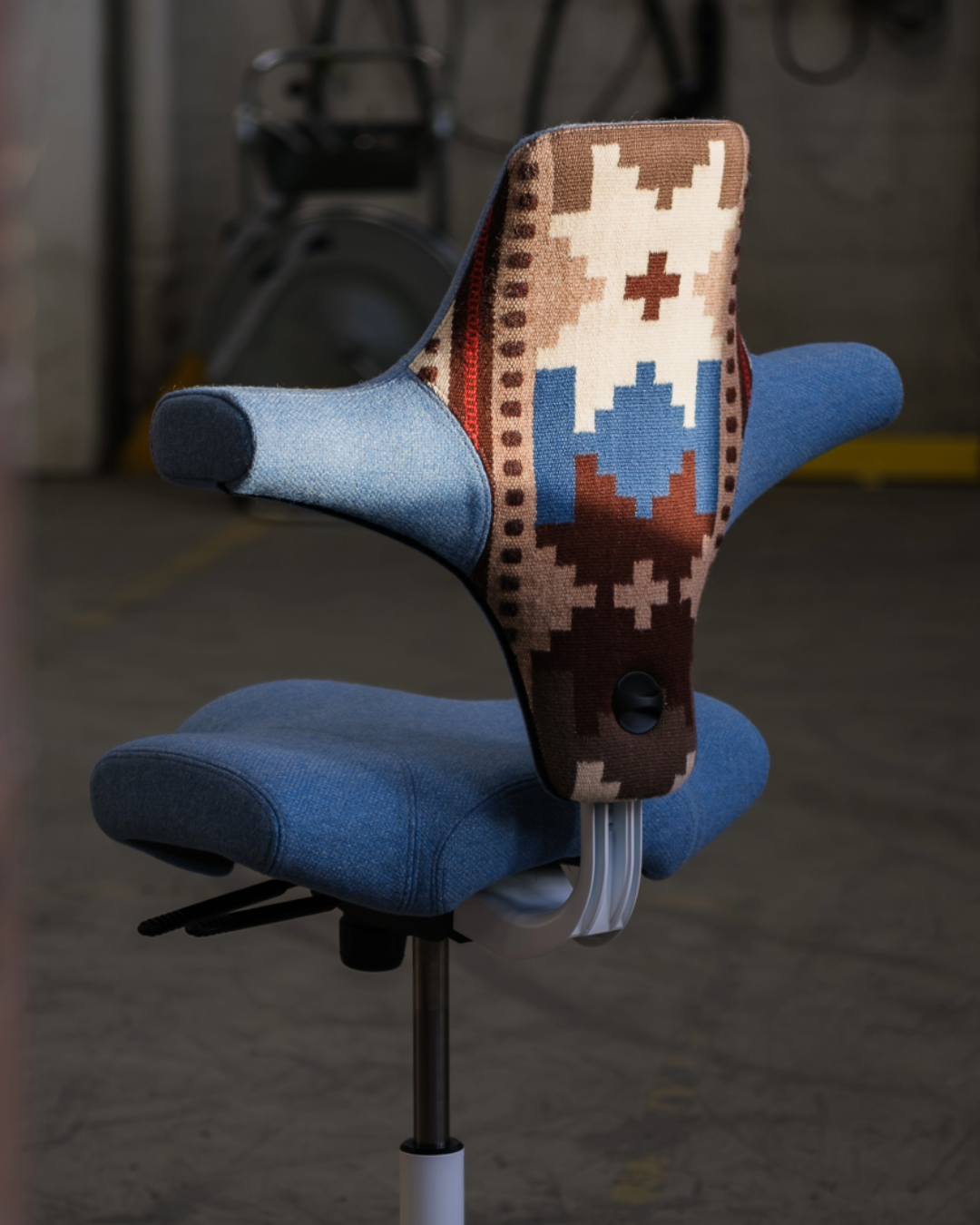
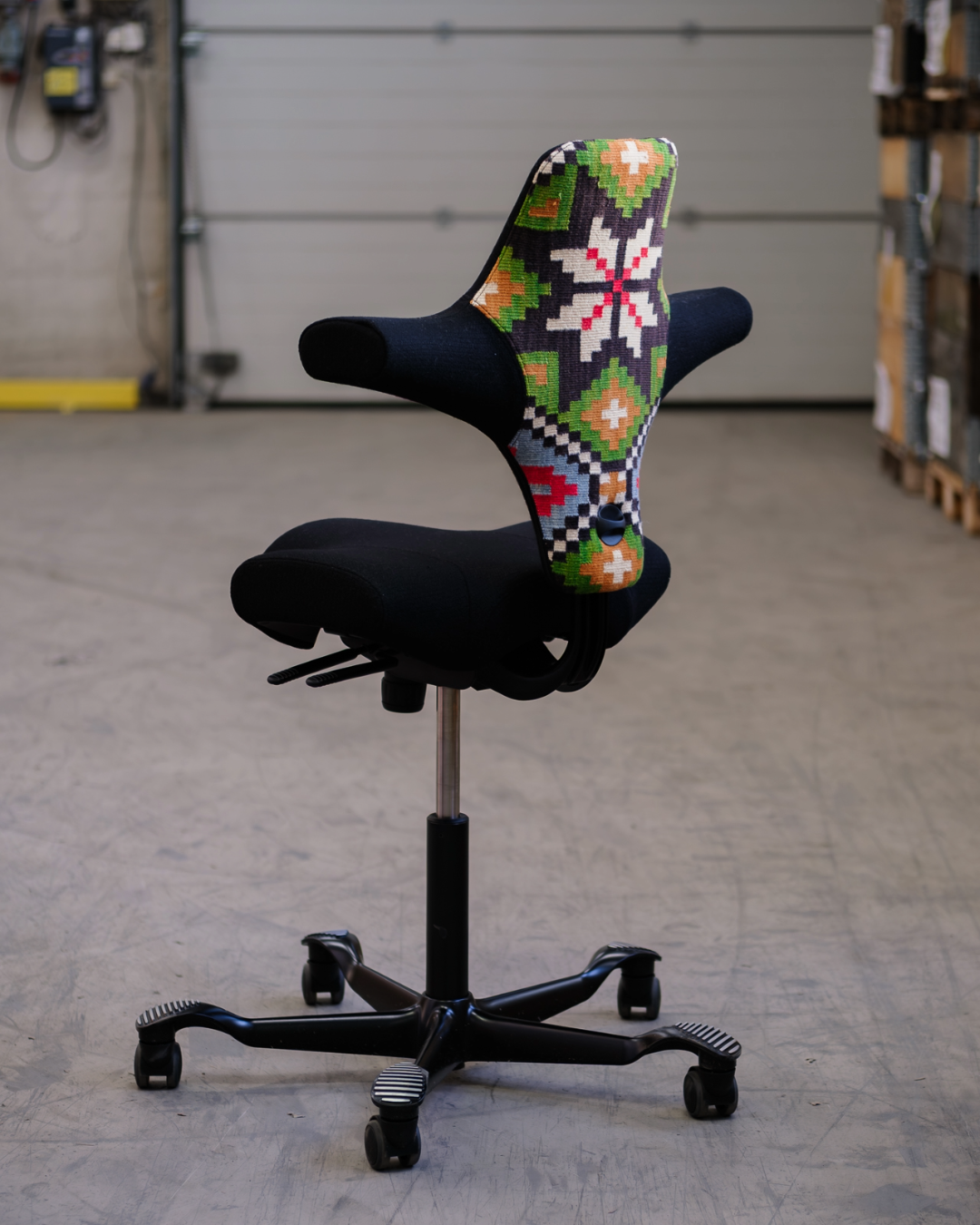
Western Norway was known for the sturdy and geometric bordeåkle. These textiles were large, warm and used on beds and walls in older homes.
The pattern used here can be traced to an åkle from Samnanger. It was later developed further by three deaf sisters in Seim who supported themselves by weaving. They created their own distinctive style and passed that knowledge into the wider community.
In 1953, the weaver Audhild Viken helped carry the tradition into a new era. She built up a weaving studio that provided work for local women and kept the craft moving forward.
The same lineage now continues on the HÅG Capisco.
Gjeste-Stova: Klostersøm and the ritual of welcoming guests
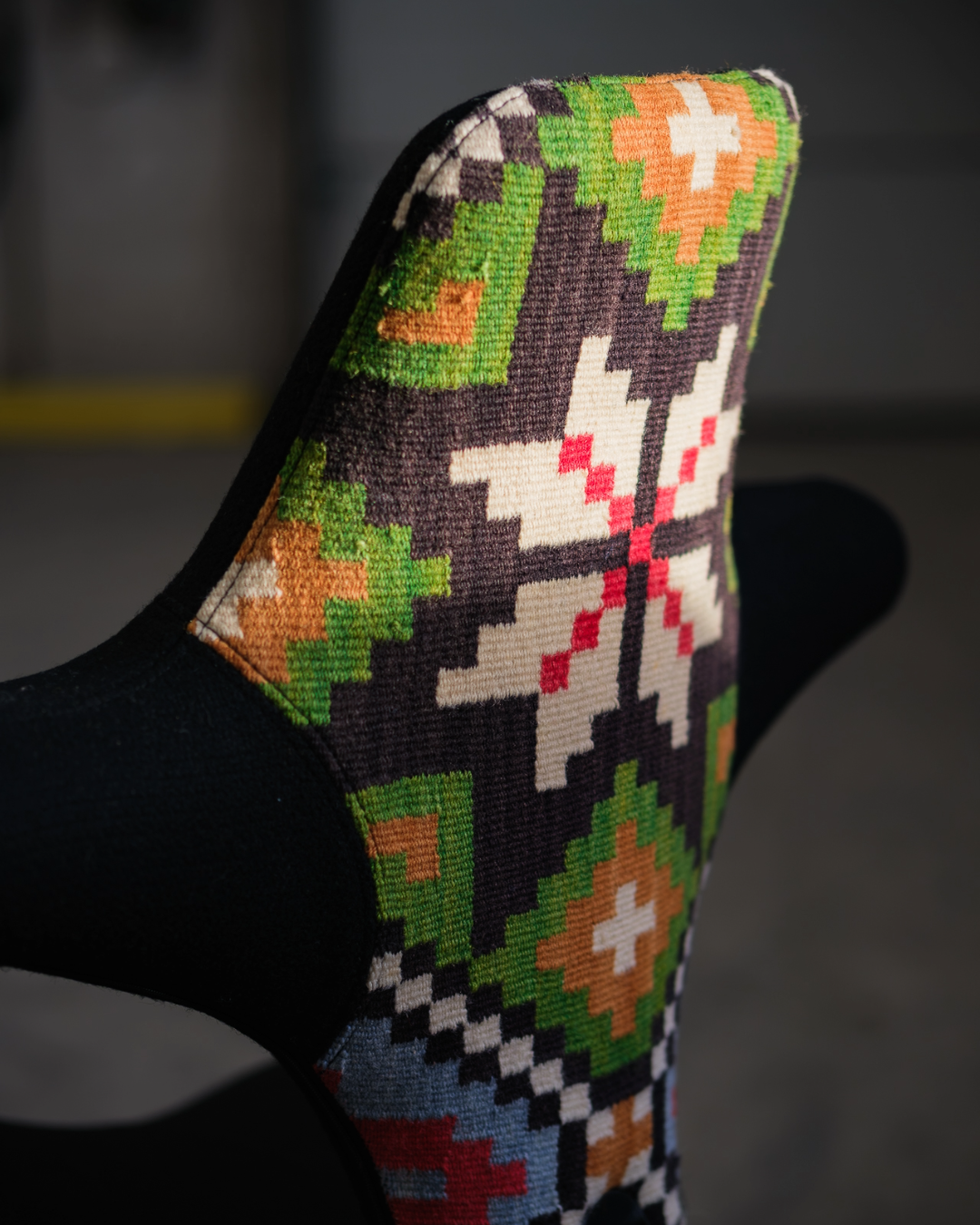
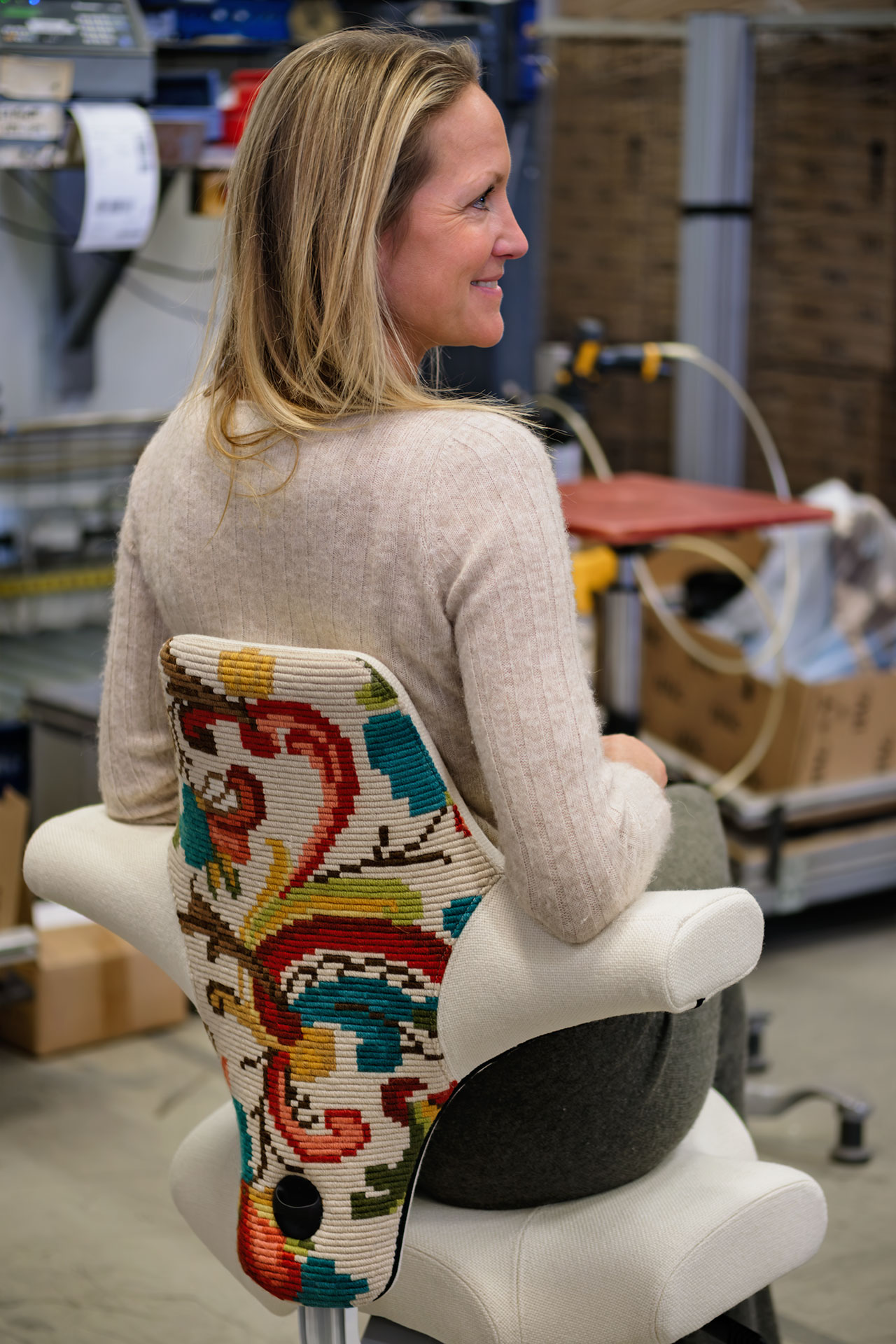
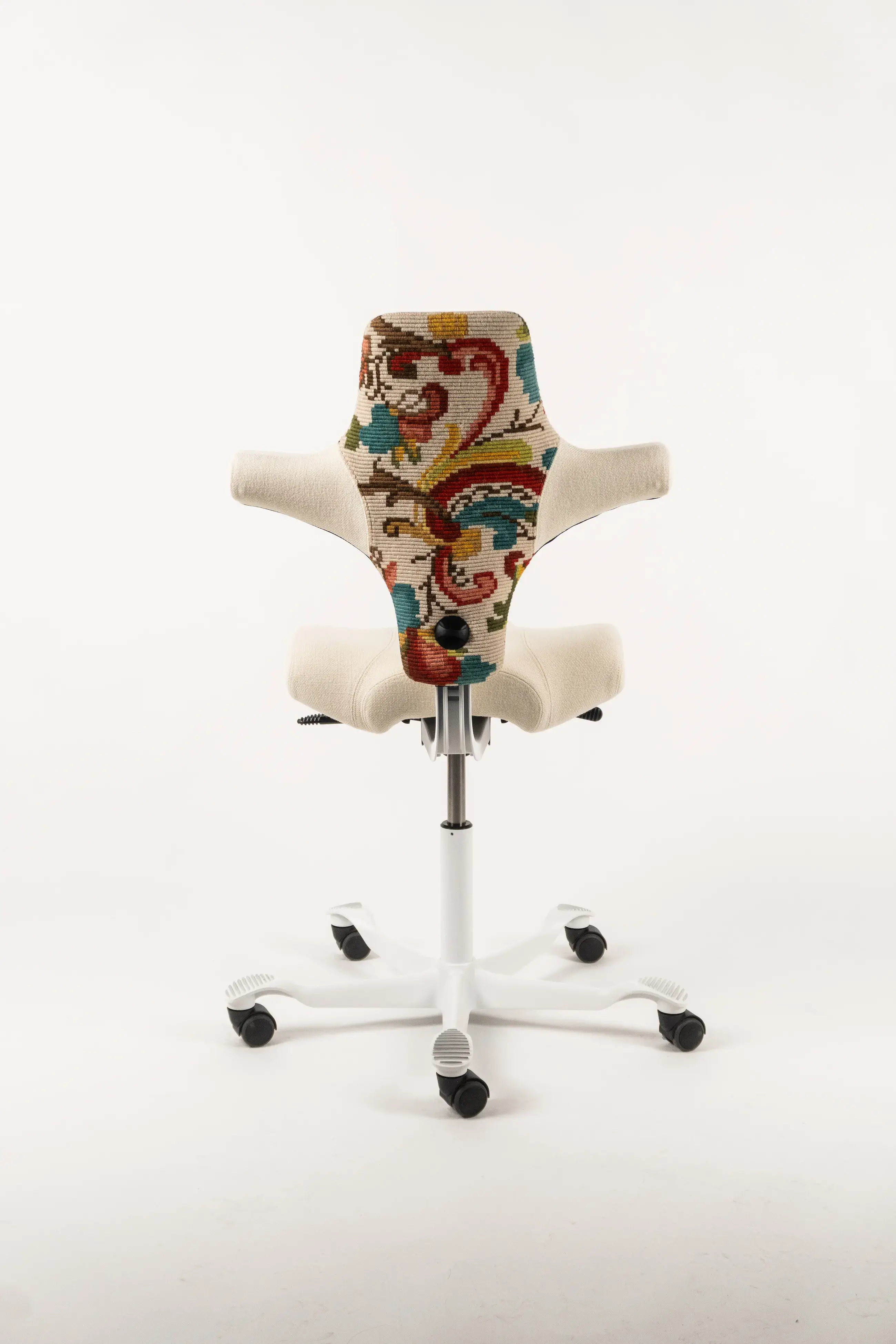
This åkle is embroidered using klostersøm, a technique that has been part of Norwegian needlework for more than a century. The name Gjeste-Stova refers to the best room in the house, the room where visitors were received and celebrations took place.
The åkle was originally used as a decorative cover on beds or walls. Through Recouture’s work it has been reshaped for a modern setting and paired with the design language of the HÅG Capisco. Old craftsmanship and contemporary ergonomics now sit side by side.
Åttebladsrose: A symbol found throughout Norway
The eight-petal rose is one of the most recognisable symbols in Norwegian folk design. It has been used in carving, rosemaling, knitting, embroidery and weaving across Western Norway and the fjord regions.
The motif represents balance, the seasons, the compass and the cycle of life. It appears in Norwegian textiles as far back as the Middle Ages.
The åkle used here is a twentieth-century interpretation. The shapes are more geometric, the colours stronger and the pattern is set inside a diamond frame. This style was typical of the period when older motifs were being refreshed for modern homes.
The piece likely comes from the weaving traditions of Jølster or Sogn/Fjordane, where many studios experimented with new colours while keeping the old symbols intact.
Roseåkle: Folk art reimagined in textile form
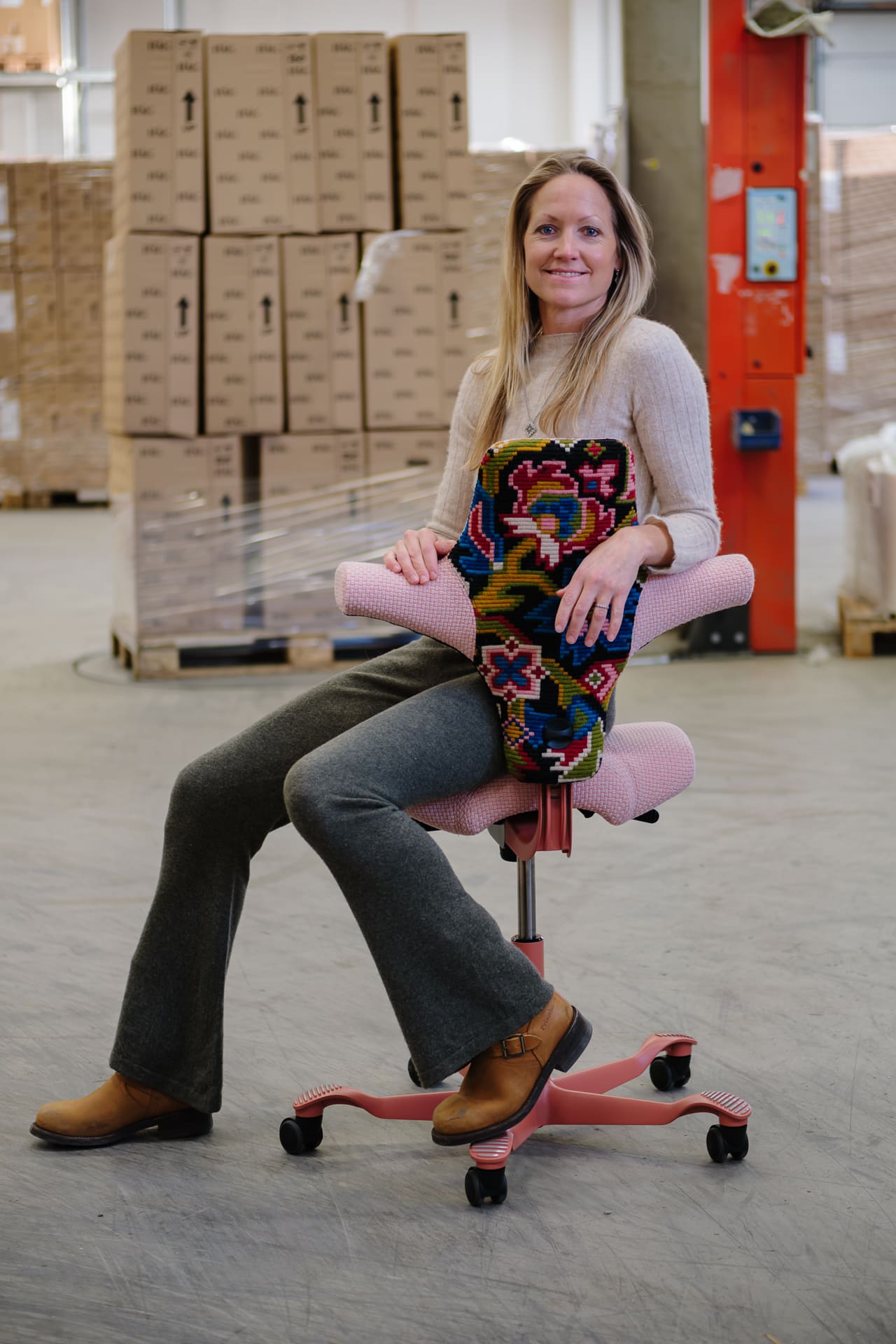
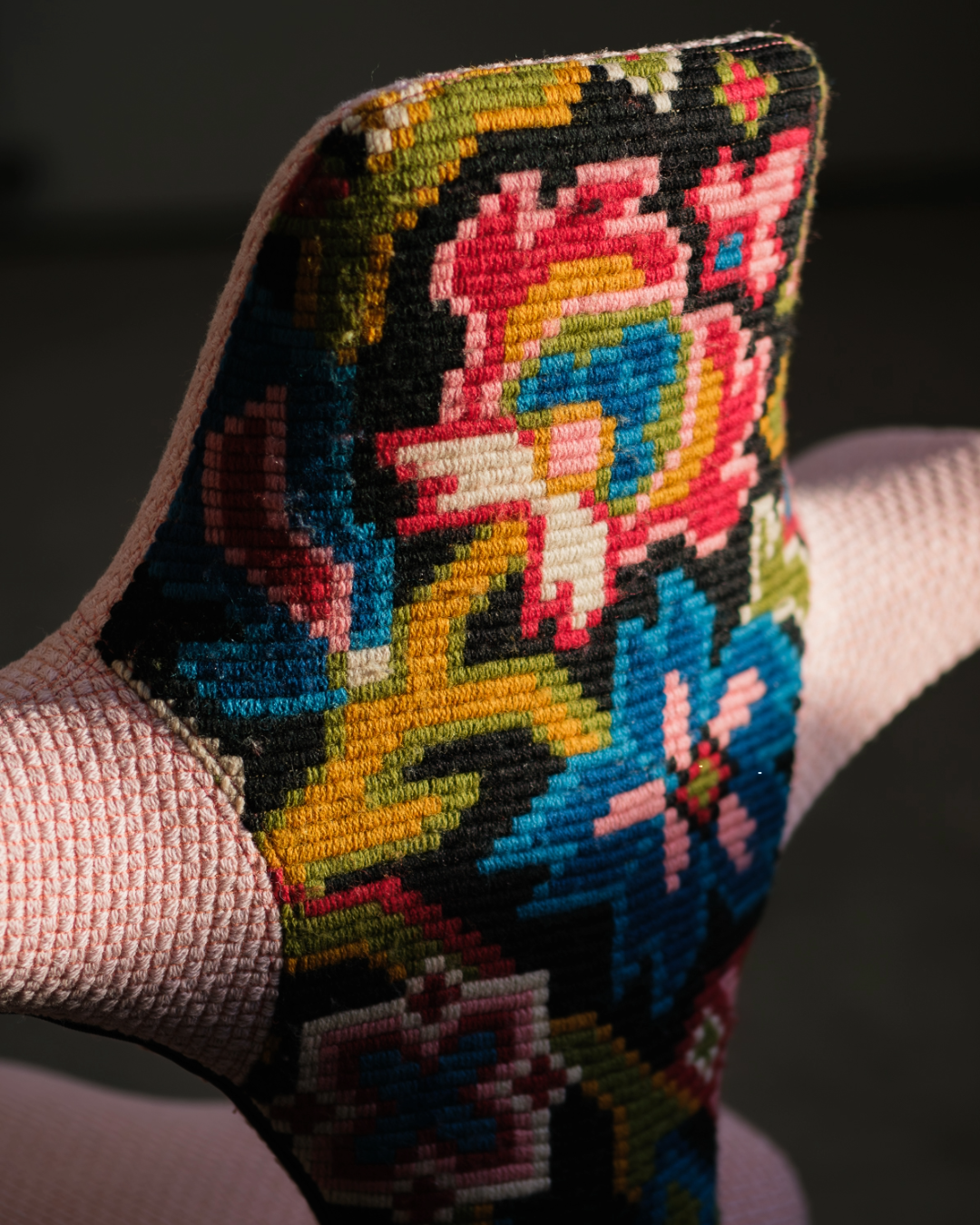
Roseåkle belongs to a different branch of Norwegian textile tradition. Instead of strict geometry, these pieces use flowing floral shapes inspired by rosemaling. The example used here contains stylised flowers, vines and curved forms embroidered in strong colours on a light background.
This style emerged during the mid-1900s when craft producers began translating rosemaling into embroidery and tapestry. The result was a lively, expressive type of åkle that blended folk art with modern home décor.
Why åkle matters
Every åkle used in this project carries its own cultural memory. Working with these textiles means researching patterns, tracing origins and recognising the women who kept these traditions alive, often through significant personal effort.
Åkle is fascinating because it allows us to see history woven into material. When a piece is restored or reused, the story continues.
Explore the HÅG x Recouture project now





/Untitled%20-%202025-12-09T131718.196.png?width=790&height=440&name=Untitled%20-%202025-12-09T131718.196.png)