flokk-interior-rh-mereo-mesh-launch_16

Mesh office chairs: when they work best and why design matters

Ergonomist Rebecka Ullholm explains what mesh backrests offer from an ergonomic perspective – and when they make sense in the workplace.

Mesh-back office chairs are often associated with ventilation and a lighter visual expression. From an ergonomic point of view, however, their value goes beyond staying cool at the desk.


To understand what mesh really offers, we spoke with Rebecka Ullholm, an ergonomist with more than 15 years’ experience advising companies on workplace health. In a previous article, Rebecka highlighted common mistakes organisations make around ergonomics. This time, the focus is more specific: what mesh backrests do ergonomically, and why design makes the difference.

flokk-image-rh-mereo-mesh-rebecka-ulholm_02
Rebecka Ullholm is an ergonomist based in Stockhom with over 15 years experience advising businesses on how to improve workplace well-being, with a special emphasis on ergonomic improvement.

What mesh offers ergonomically

From an ergonomic perspective, a well-designed mesh back combines flexibility, pressure relief and responsive support.


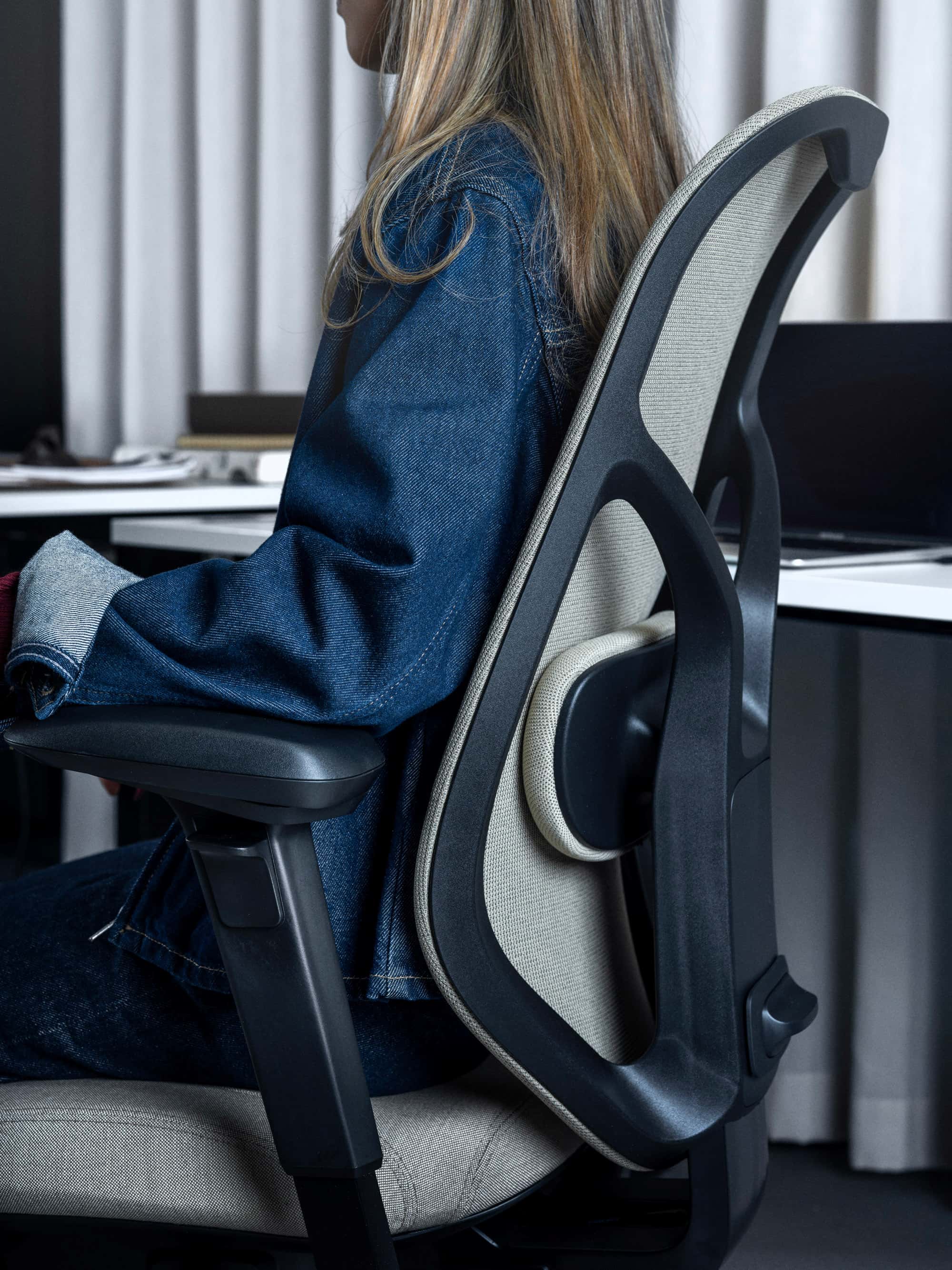
“A good mesh distributes pressure evenly across the back, reducing load on the shoulder blades, thoracic spine and lower back,” explains Rebecka. “At the same time, the material follows the body’s natural movements.”


Unlike some traditional upholstered backs, high-quality mesh can shape itself to the contours of the spine while allowing small, continuous movements. When designed properly, modern mesh materials retain their elasticity and support over time.


Posture, movement and long-term comfort 

One of the key advantages of mesh is how it supports movement without sacrificing support.


“A high-quality mesh back supports a naturally upright posture and makes it easier for the body to move freely,” says Rebecka. “This encourages micro-movements, which improve circulation and reduce stiffness during long periods of sitting.”


For users who spend much of the day at their desk, this balance between stability and flexibility can make sitting feel less rigid over time. 

flokk-interior-rh-mereo-mesh-launch_02
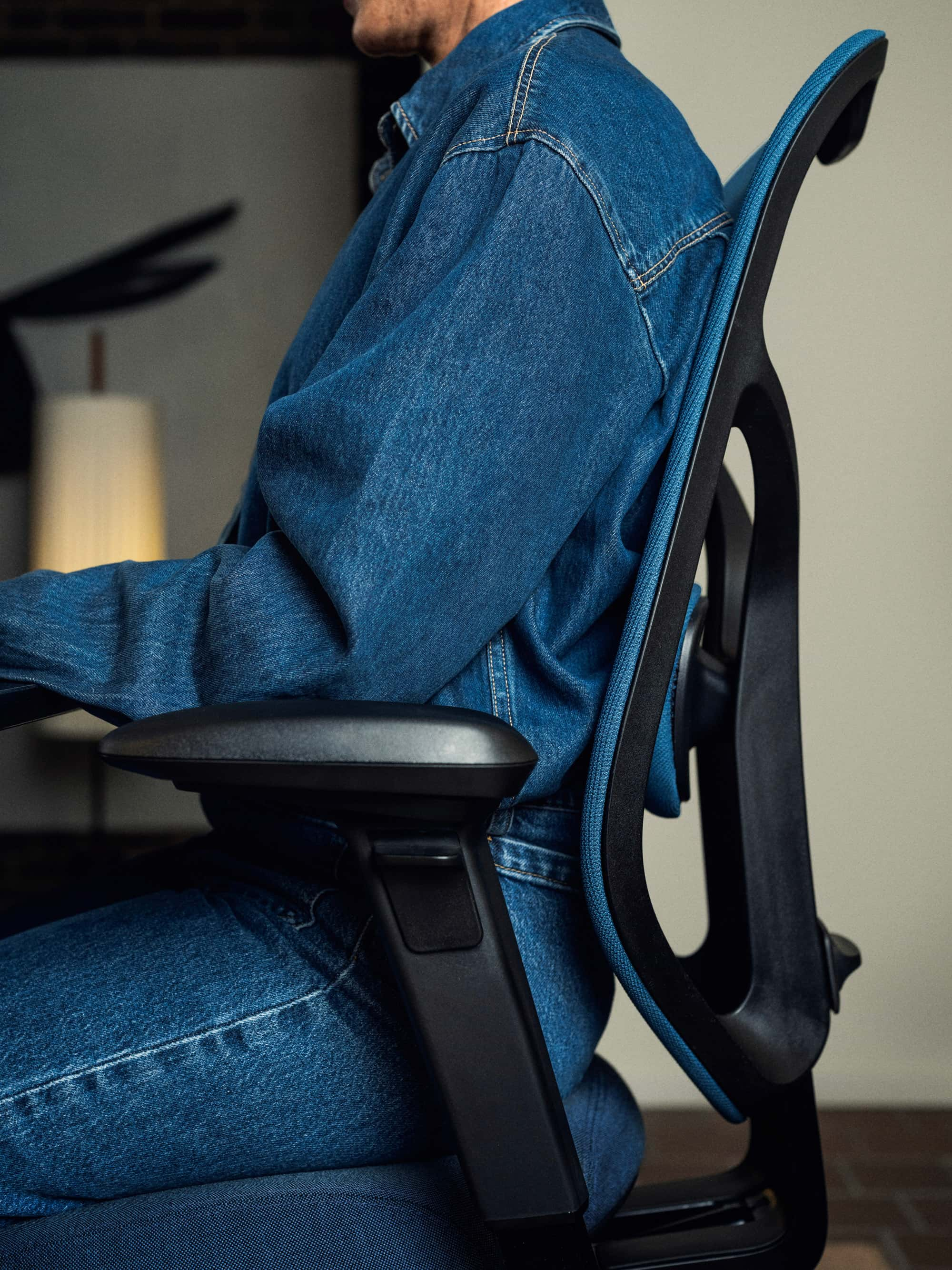
A well-designed mesh back supports upright posture and encourages small, continuous movements. | Featured: RH Mereo Mesh

When mesh works particularly well

Mesh is not a universal solution, but in the right context it can be especially effective.


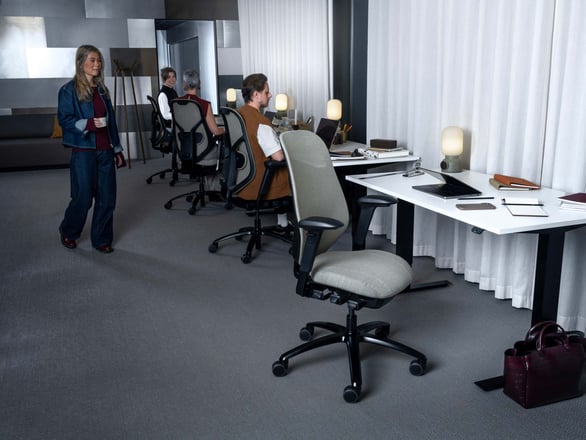
“It performs very well in environments where several people share the same chair, such as activity-based offices or flexible workspaces,” Rebecka explains. “The material adapts quickly to different users and provides support that is easy to settle into.”


Mesh is also well suited to people who sit for long periods and benefit from a backrest that combines structure with flexibility. In warmer office environments, its breathability often makes it the most comfortable option.


How to recognise high-quality mesh 

Not all mesh backrests behave the same. From an ergonomic point of view, quality comes down to how the material supports the body over time.


Good mesh should: 

  • Offer resistance and responsiveness, rather than feeling loose or flimsy 
  • Use structured or zoned tension to support different areas of the back 
  • Spring back to shape quickly after movement, without sagging 
  • Be integrated into the chair’s frame, not simply stretched over it.


A well-designed mesh distributes pressure evenly across the back while allowing movement, rather than collapsing or creating pressure points. 


How design makes the difference: RH Mereo Mesh

The ergonomic performance of a mesh back depends entirely on how material and construction work together.


“A well-designed mesh back is about the balance between frame construction, material elasticity, tension zoning and ergonomic principles,” says Rebecka.


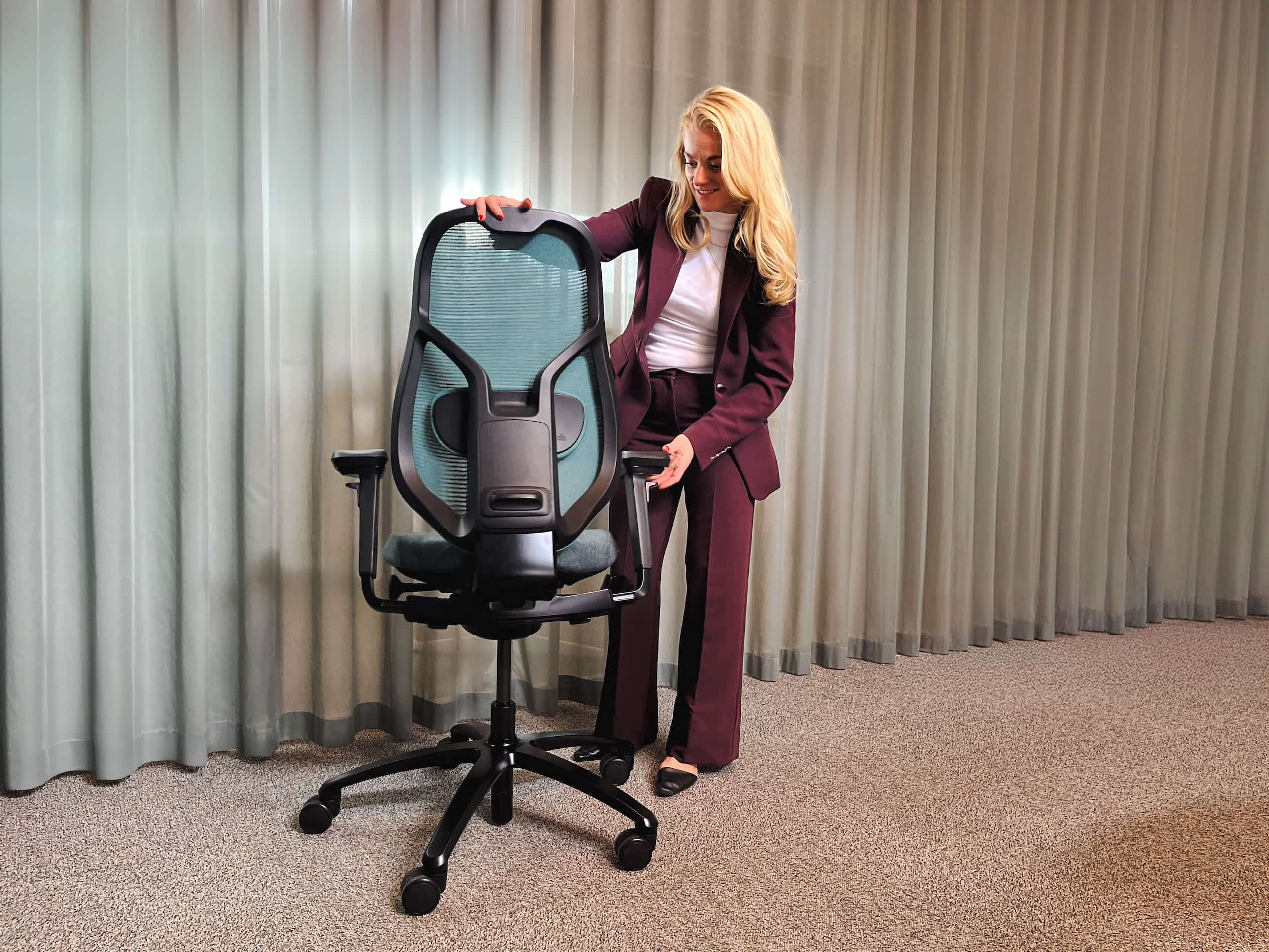
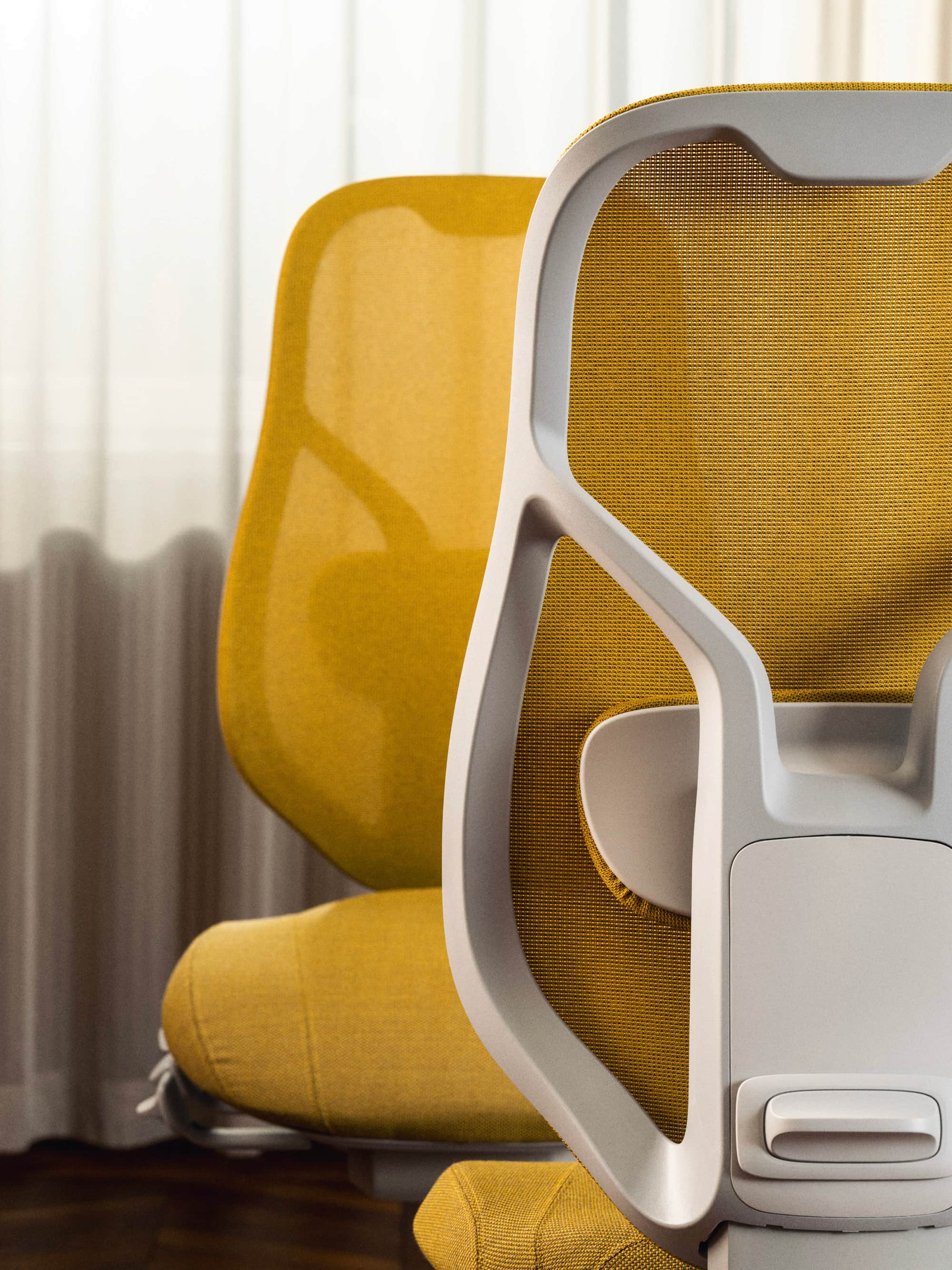
The RH Mereo Mesh uses Tale by Gabriel Fabrics, a woven mesh with a dimensional structure that is integrated into the chair’s frame. Combined with engineered tension zoning, this construction provides defined support where it is needed, such as in the lumbar area, while allowing flexibility where movement is beneficial.


“The result is a backrest that stabilises without feeling restrictive,” she explains. “Ventilation comes naturally with the material, while maintaining proper ergonomic support.”

flokk-interior-rh-mereo-mesh-launch_07
RH Mereo Mesh in Oat Beige | Explore more
flokk-interior-rh-mereo-mesh-launch_13
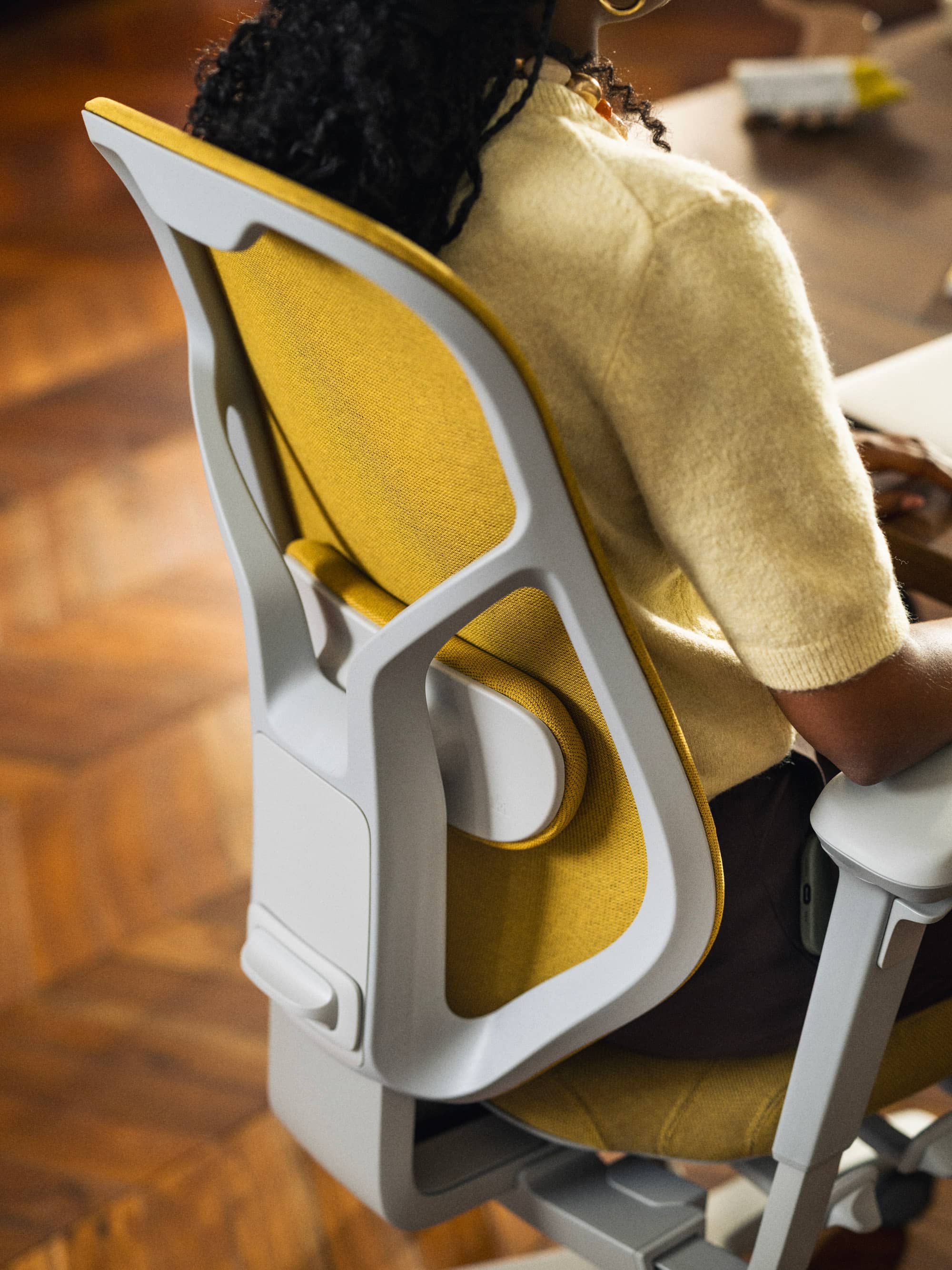
RH Mereo Mesh in Saffron Yellow | Explore the full colour palette

Choosing the right solution

When selecting chairs for a workplace, Rebecka’s advice is clear: focus on variation and individual adjustment.


“There is no single chair that fits everyone,” she says. “Mesh can be an excellent option for teams who work long hours, need ventilation or prefer a more adaptive type of support.”


She also recommends involving employees n the selection process, allowing them to test different options and provide feedback before a final decision is made. This often leads to better decisions and higher acceptance in everyday use. 

What matters most is that the chair supports the person, not the other way around. And, as Rebecka emphasises, the chair is only one part of the bigger picture. Desk height, screen height and working habits all need to work together to create a sustainable ergonomic work environment. 


Key takeaways

  • Mesh backrests offer pressure relief, flexibility and ventilation when well designed 
  • High-quality mesh supports posture while allowing natural movement during long periods of sitting 
  • Mesh works particularly well in shared, flexible and warmer office environments 
  • Mesh is not universally better than upholstery – suitability depends on the user and context 
  • RH Mereo Mesh combines a high-quality woven mesh, tension zoning and frame integration to deliver adaptive support without compromising stability 


When mesh is the right choice

Choosing a mesh-back chair is not about following a trend, but about understanding how different materials support different bodies and working environments. When designed well, mesh can provide a balance of support, movement and comfort that suits long working days, shared use and warmer spaces.


RH Mereo Mesh is built on this principle. By combining a structured, woven mesh with engineered tension zoning and an integrated frame, it demonstrates how mesh can deliver both stability and adaptability without compromise.


As Rebecka emphasises, the goal is always the same: a chair that supports the person, not the other way around. When mesh is chosen for the right reasons and designed with ergonomic intent, it becomes a practical, long-term solution rather than a stylistic choice.

This might also interest you