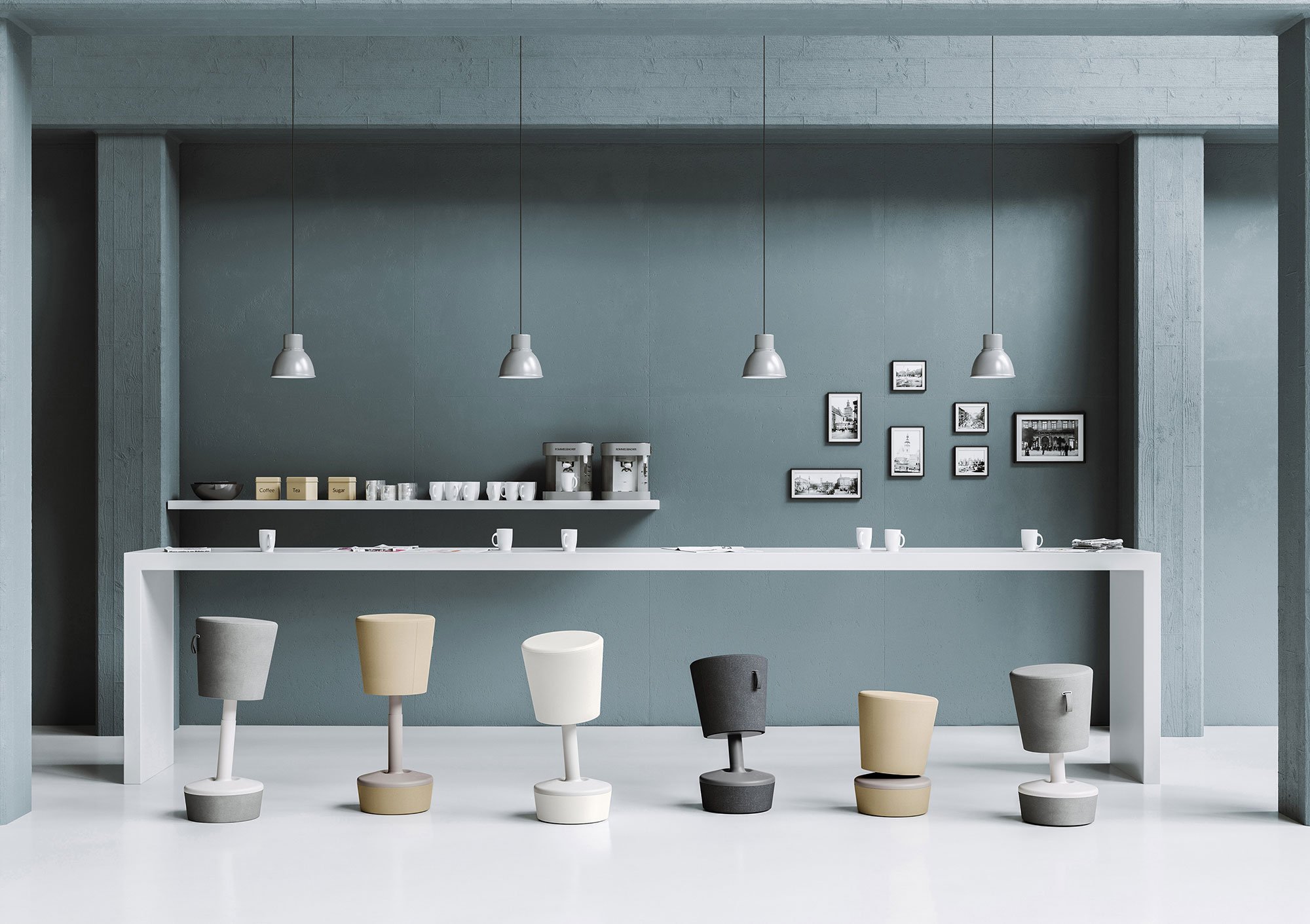
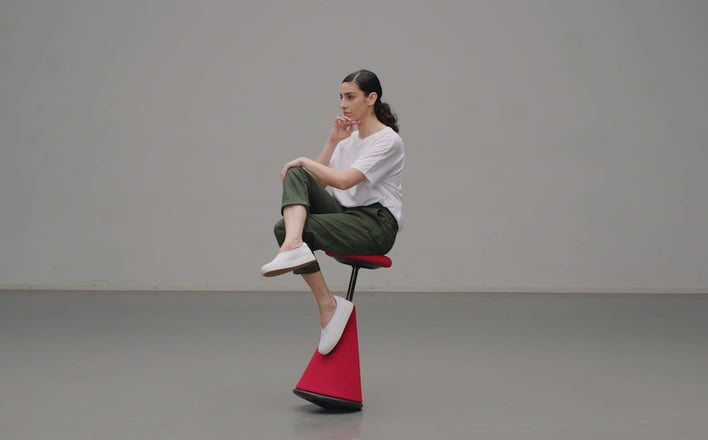
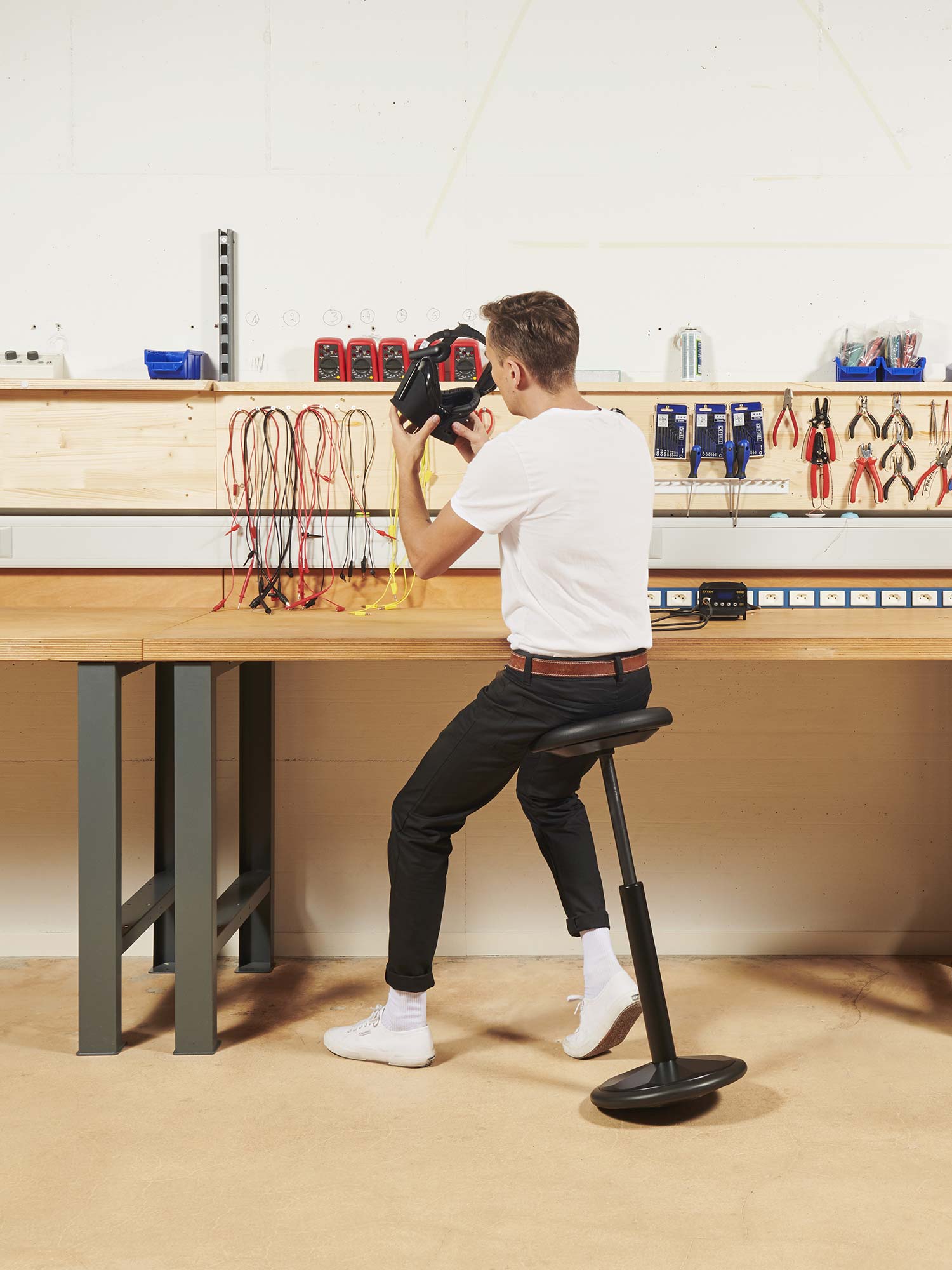
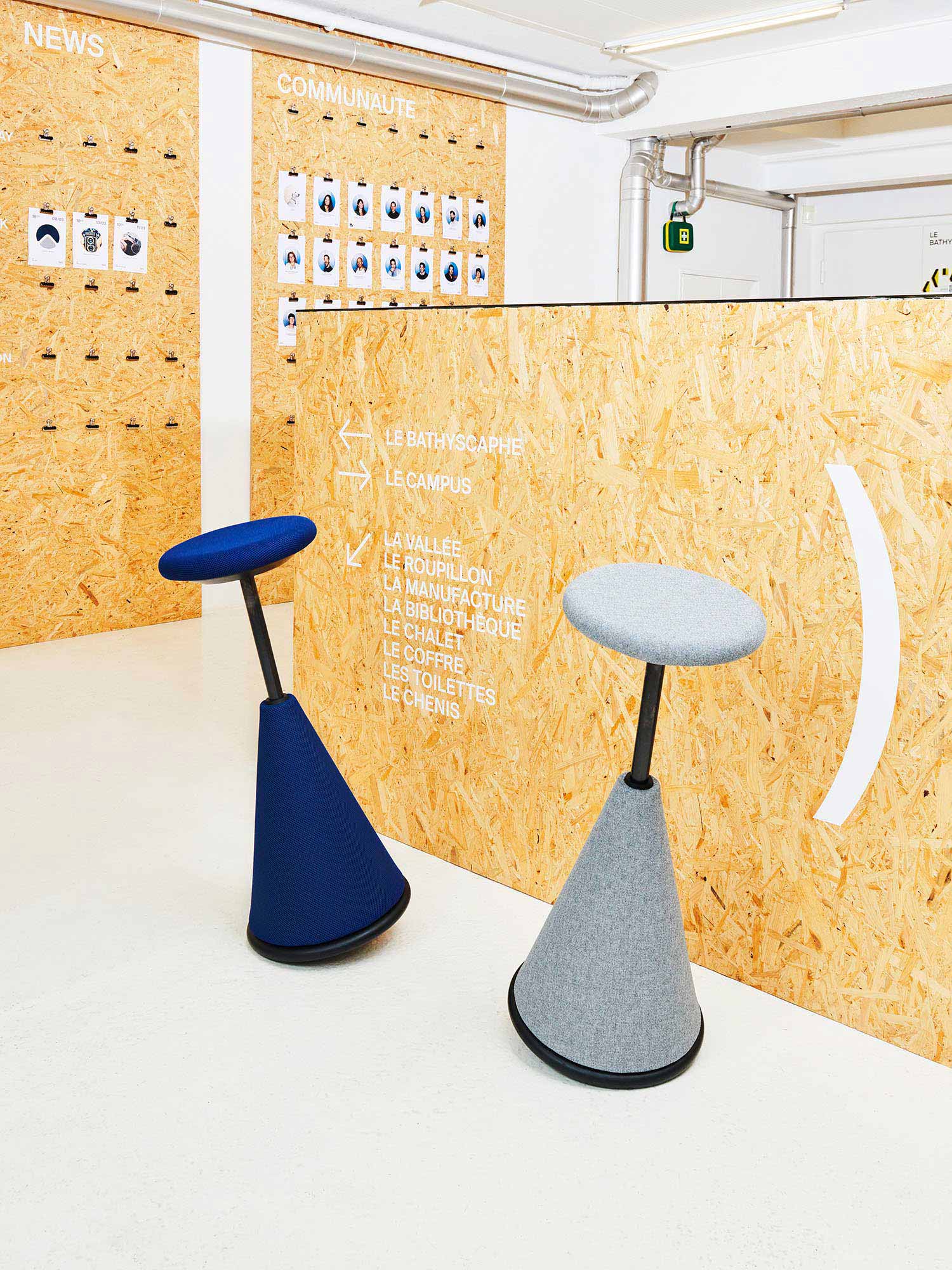
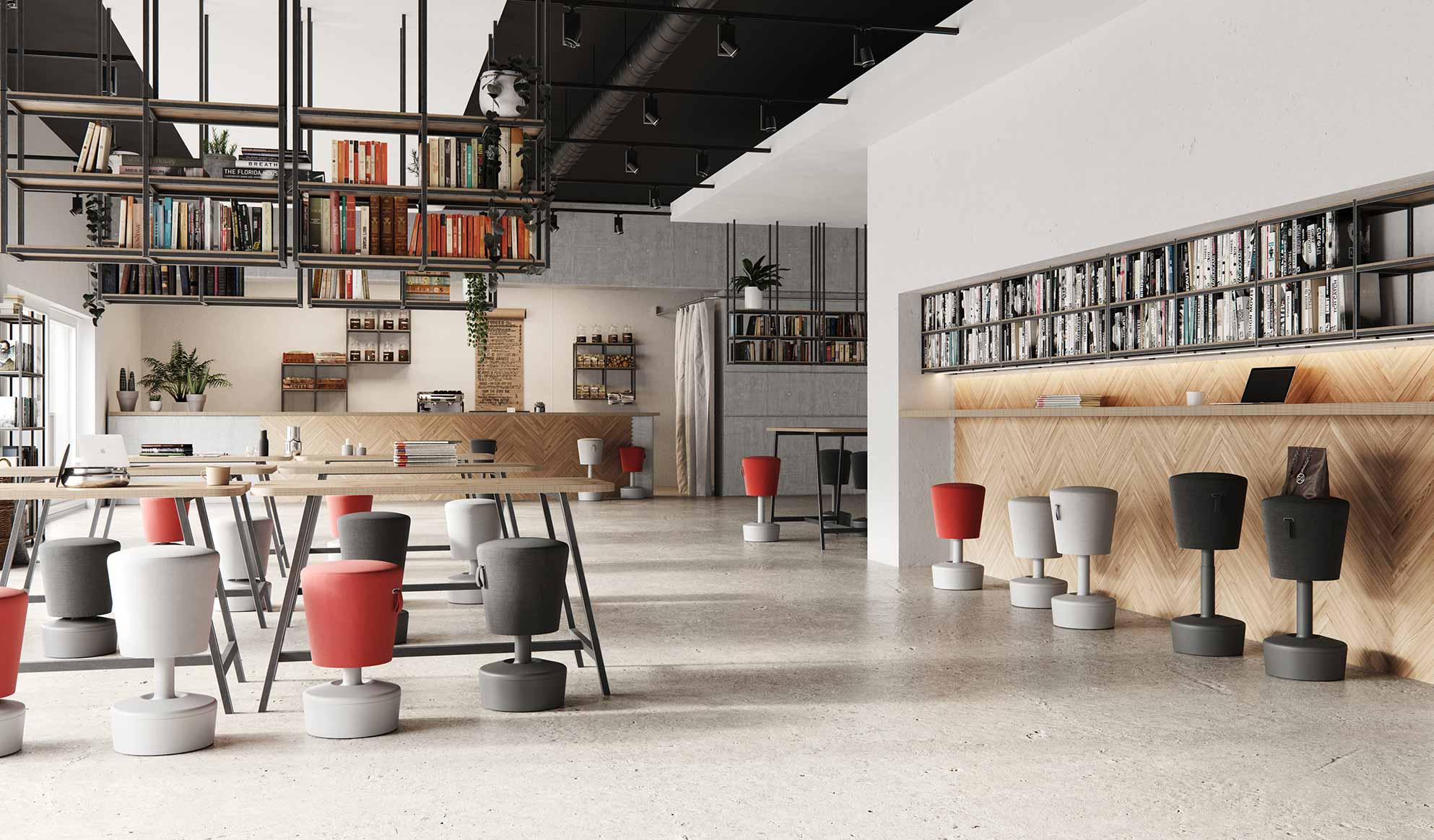
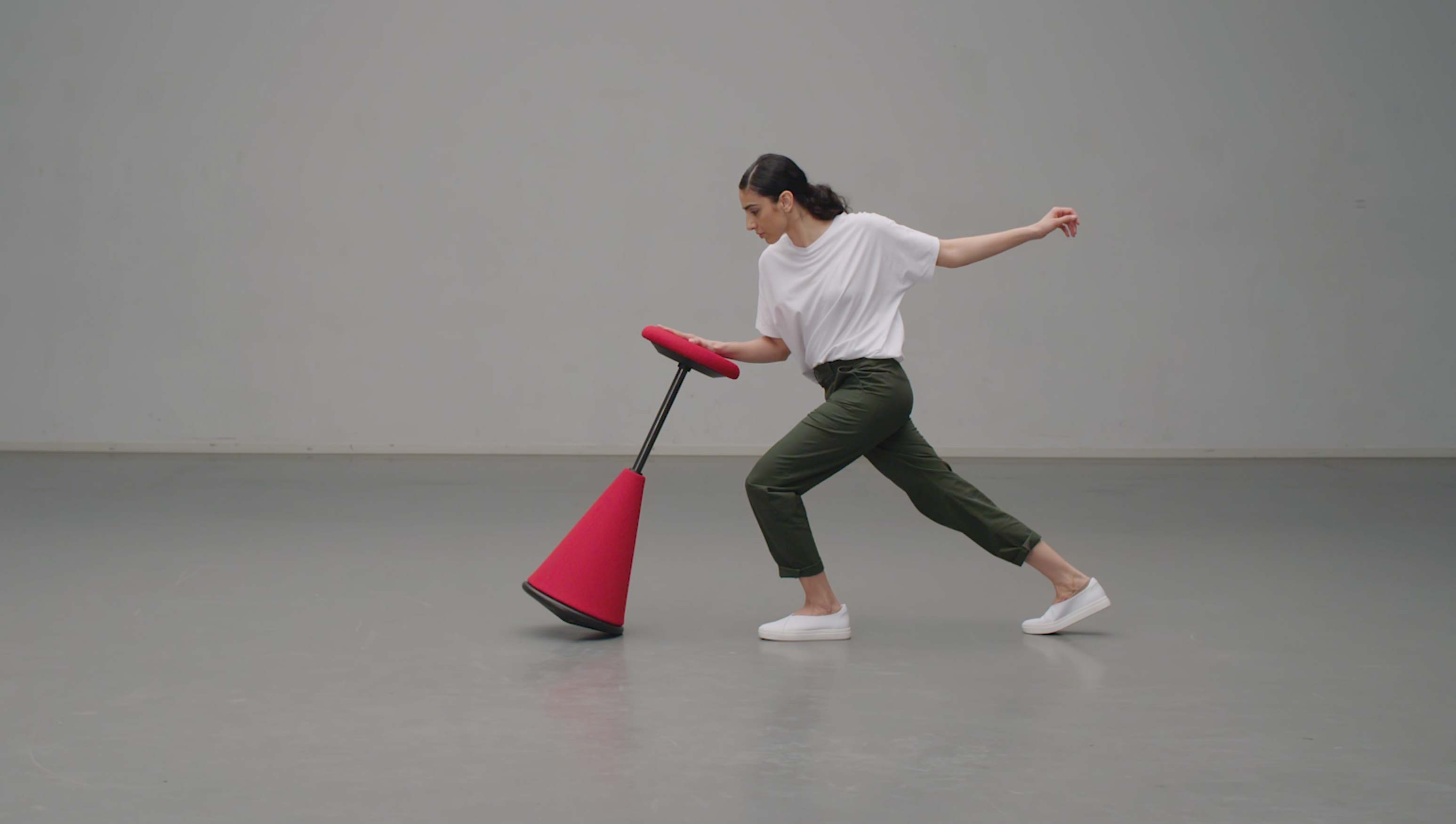
If you sit still for long stretches, your body feels it; stiffness through the back, tight shoulders, less ease of movement by the end of the day. A balance stool is one answer to that. There's no backrest and no fixed base, so staying upright means your body is always making small corrections instead of settling into one position.
How it actually works
Most balance stools have a rounded or tilting base, and they're height-adjustable, so you can use one at desk height or perched at standing-desk height. There's no position to lock into: your trunk and hips are doing continuous small work to keep you balanced, in place of the stillness a normal chair lets you fall into.
That's the whole idea. What it actually gives you is a bit more specific than "active sitting" marketing usually suggests; some of it holds up well, some of it doesn't.
What holds up
It keeps you moving, and that's the real point.
The thing a balance stool is working against is time spent completely still, not any one muscle group in particular. Encouraging small, constant shifts in posture is a solid way to cut down on that, and that matters more for how you feel by 5pm than any single feature on a chair.
Your body does measurably more work, even at rest.
Several independent studies, comparing energy expenditure on a stability ball versus an ordinary chair and comparing an active-sitting chair to a standard office chair, consistently find higher oxygen consumption and energy expenditure on the unstable surface — typically 7 to 19% more, just from the ongoing small effort of staying balanced.
Where the claims usually overreach
It won't reliably build your core strength.
A study comparing muscle activity on a stability ball versus an ordinary chair found no meaningful increase in core muscle activity from sitting on an unstable surface alone. Separately, research comparing a dynamic office chair to a stability ball found comparable muscle activation between the two — but only while participants performed deliberate pelvic exercises on the seat, not from ordinary sitting.
If building core strength is what you're after, think of the stool as supporting the habit, not doing the exercise for you.
It might not sharpen your focus; if anything, the opposite.
In a 2019 study measuring this directly, researchers found typing speed was slightly lower on an active-sitting chair than on an ordinary one, and participants rated their own productivity lower too. It's a small effect, but it points the wrong way for a "boosts focus" claim. If your work involves sustained, accuracy-critical typing, that's worth knowing before you switch. You might still feel more alert and settled using one, but statistics show you may not work faster.
Who it's actually for
A balance stool suits you if you already move between tasks, take calls standing, or use a sit-stand desk and want a third option beyond sitting and standing. It's a poor swap for a properly adjustable task chair if you're doing eight hours of sustained, focused work. The constant low-level effort of staying balanced is its own demand on the body, not a break from one.
Full days on a balance stool from day one are uncomfortable for most people; start shorter, the same way you'd ease into a sit-stand desk. Some people take to all-day use quickly. Others find active sitting just isn't for them, however long they stick with it. Neither reaction means the stool's no good, it means fit varies.
In short
A balance stool is a genuine way to move more through your day, and your body works measurably harder for it, in a modest, well-replicated way. It won't build core strength or sharpen your concentration on its own. Like most seating, it comes down to fit - what your work involves, and how you naturally move - not a universal upgrade.