Previous parts of the series | Article 1 | Article 2
Flokk has been exploring alternatives to plastic, with a focus on what future furniture materials might look like. This phase moved the work from research into physical testing.
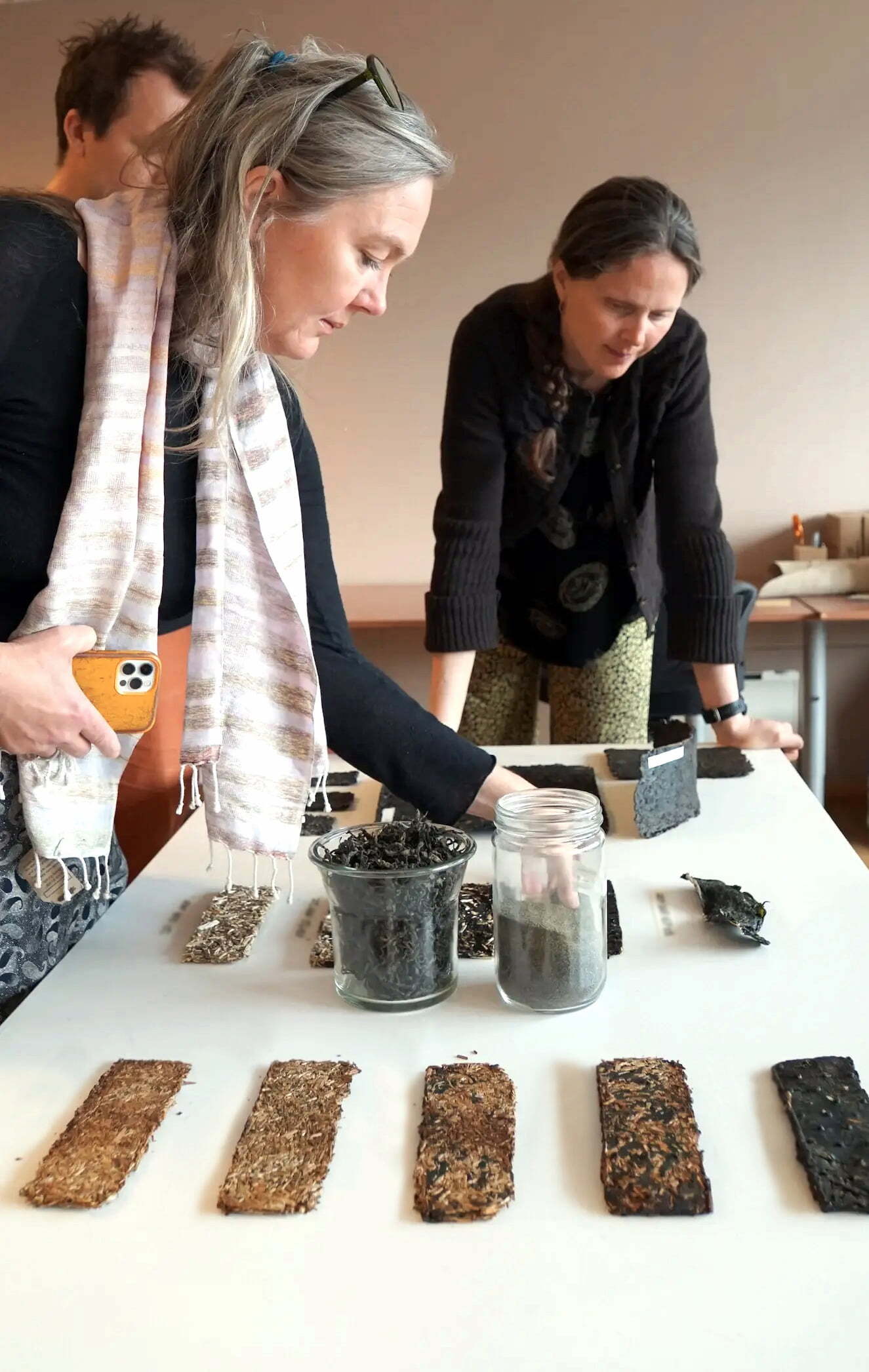
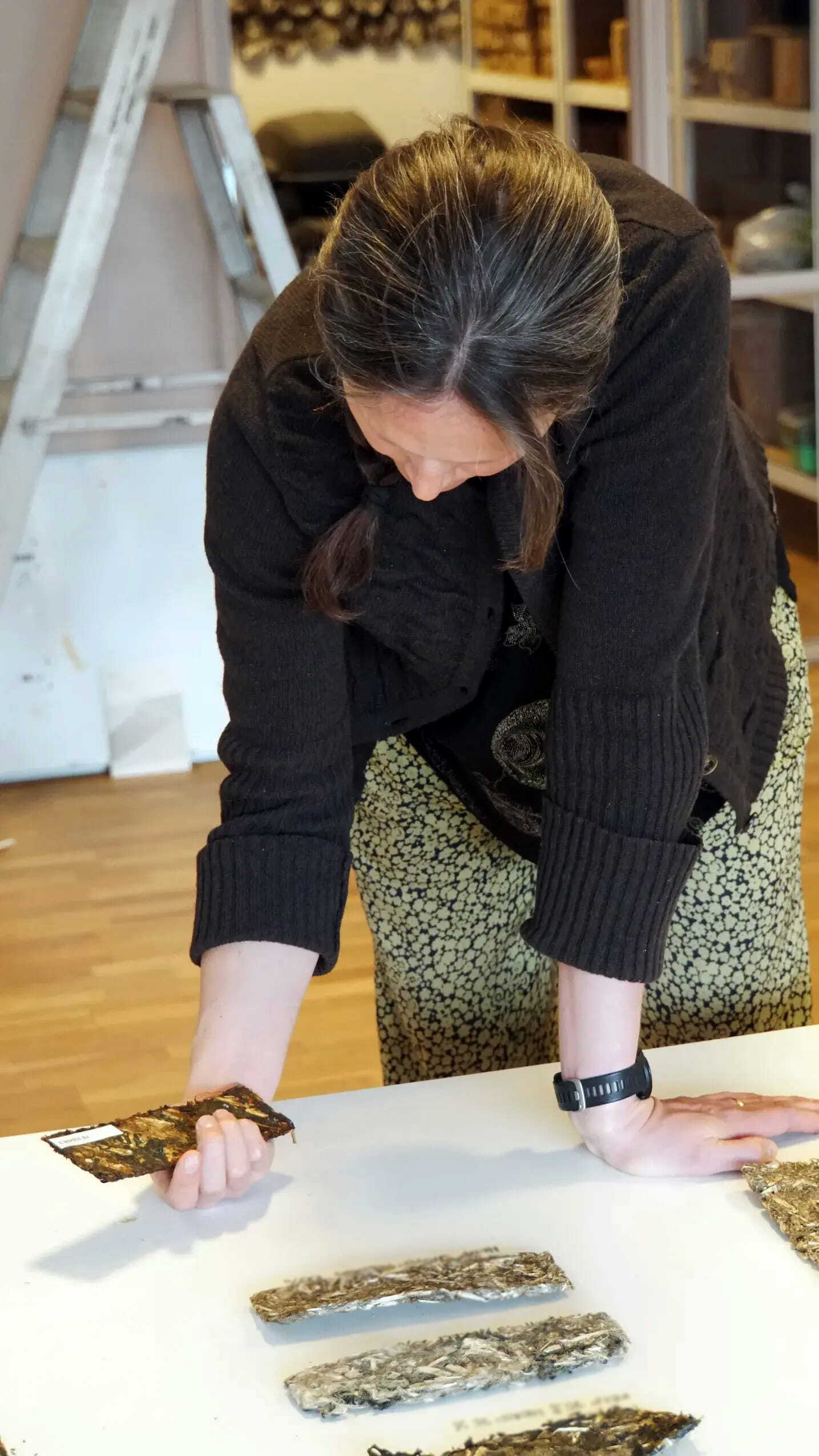
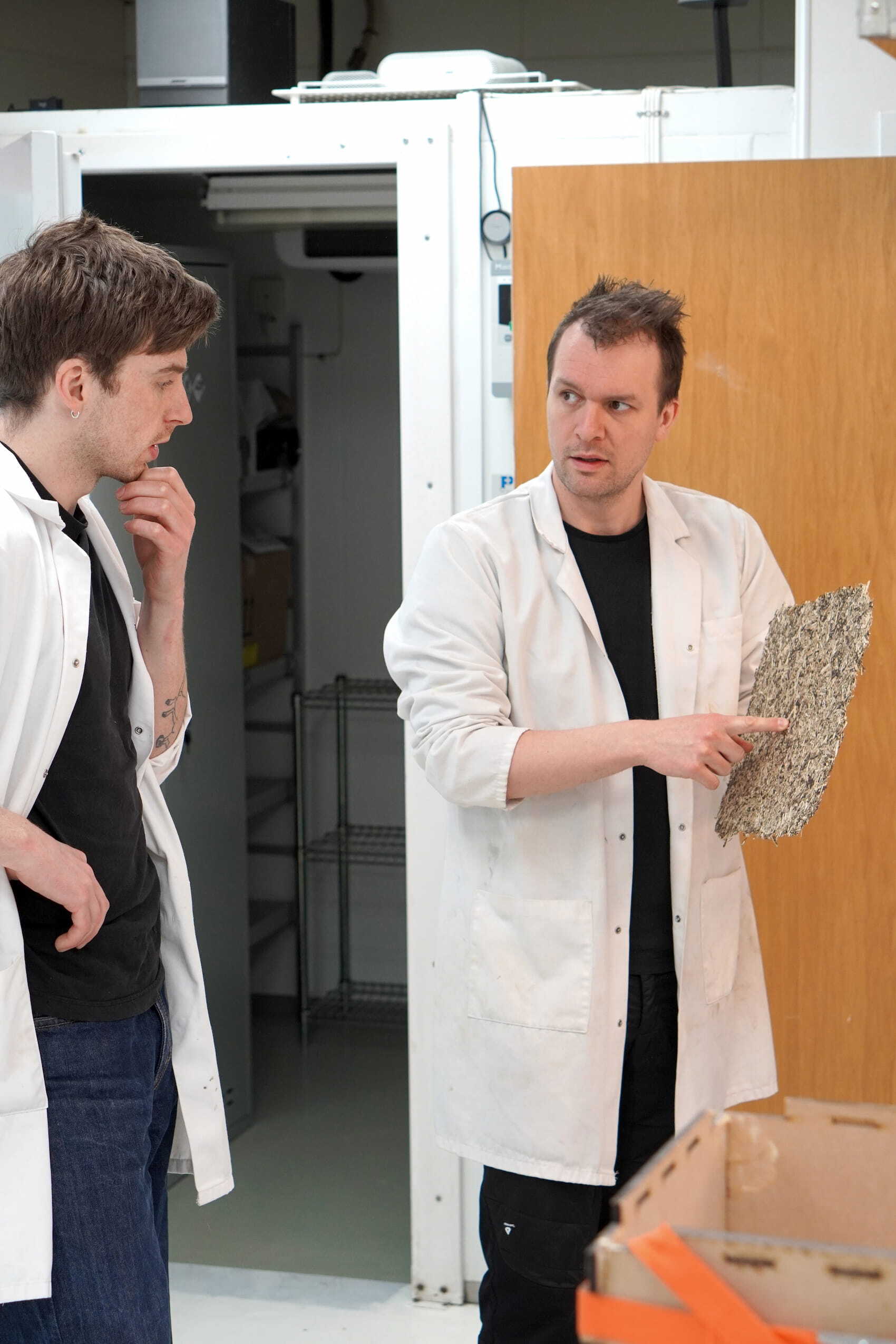
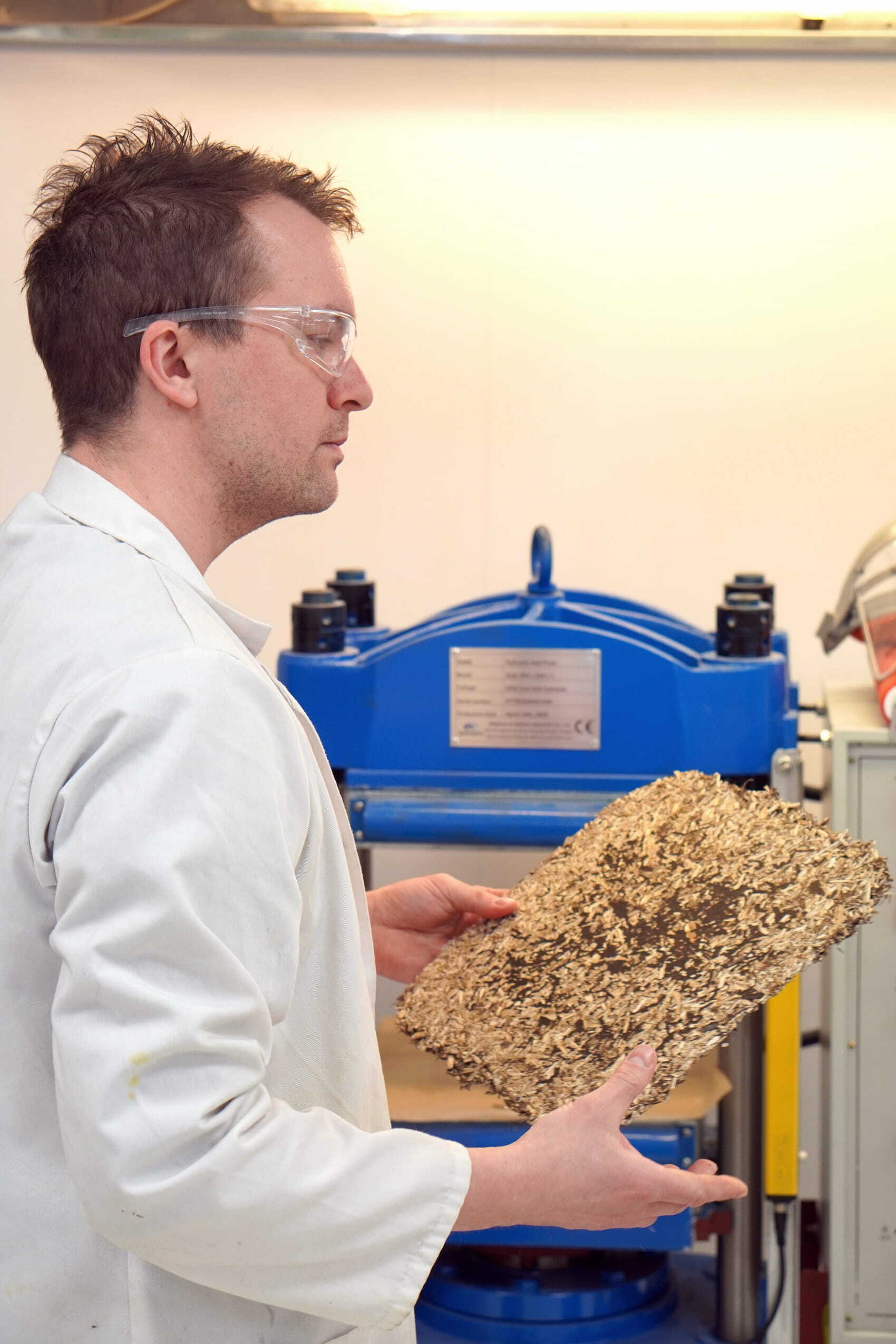
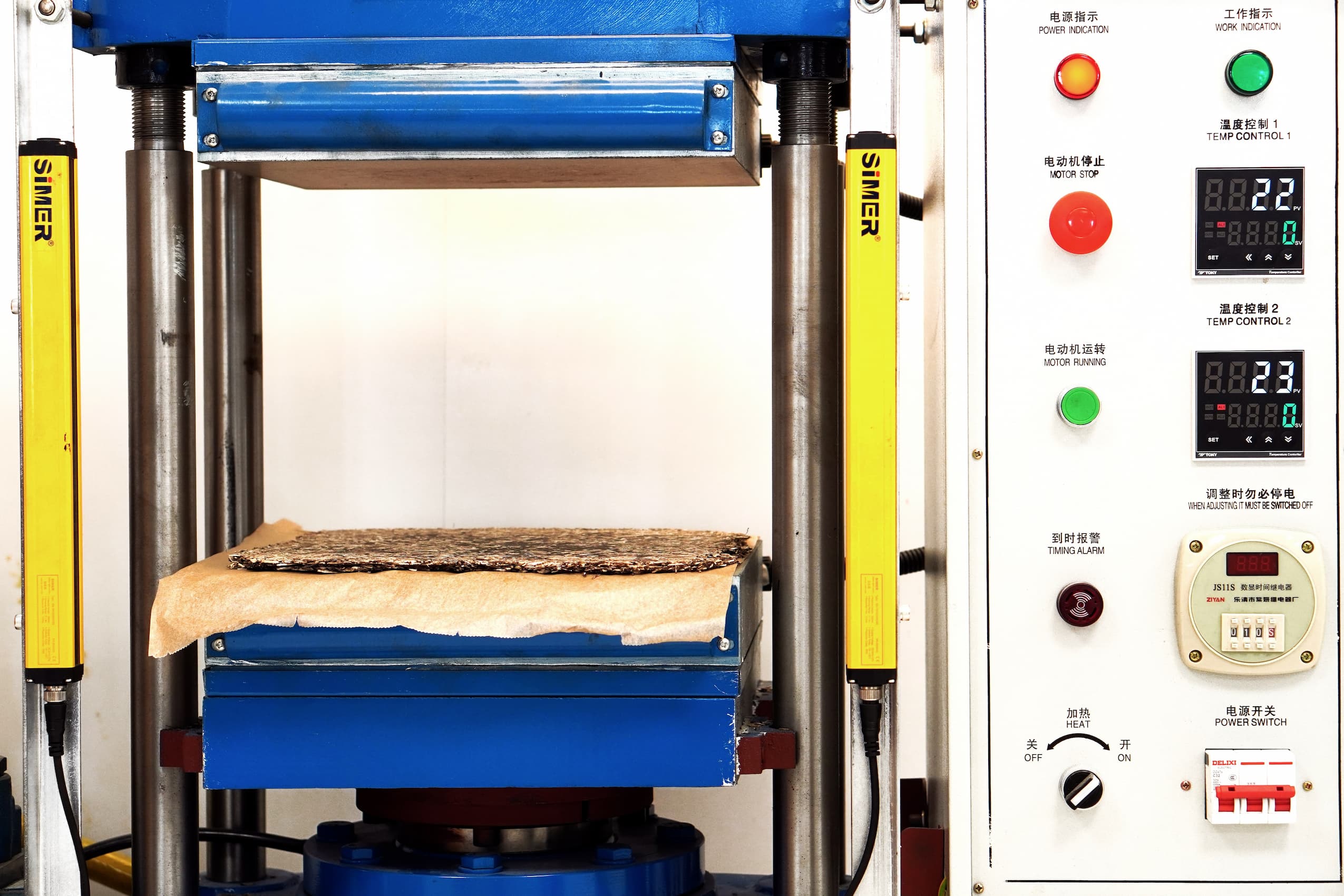
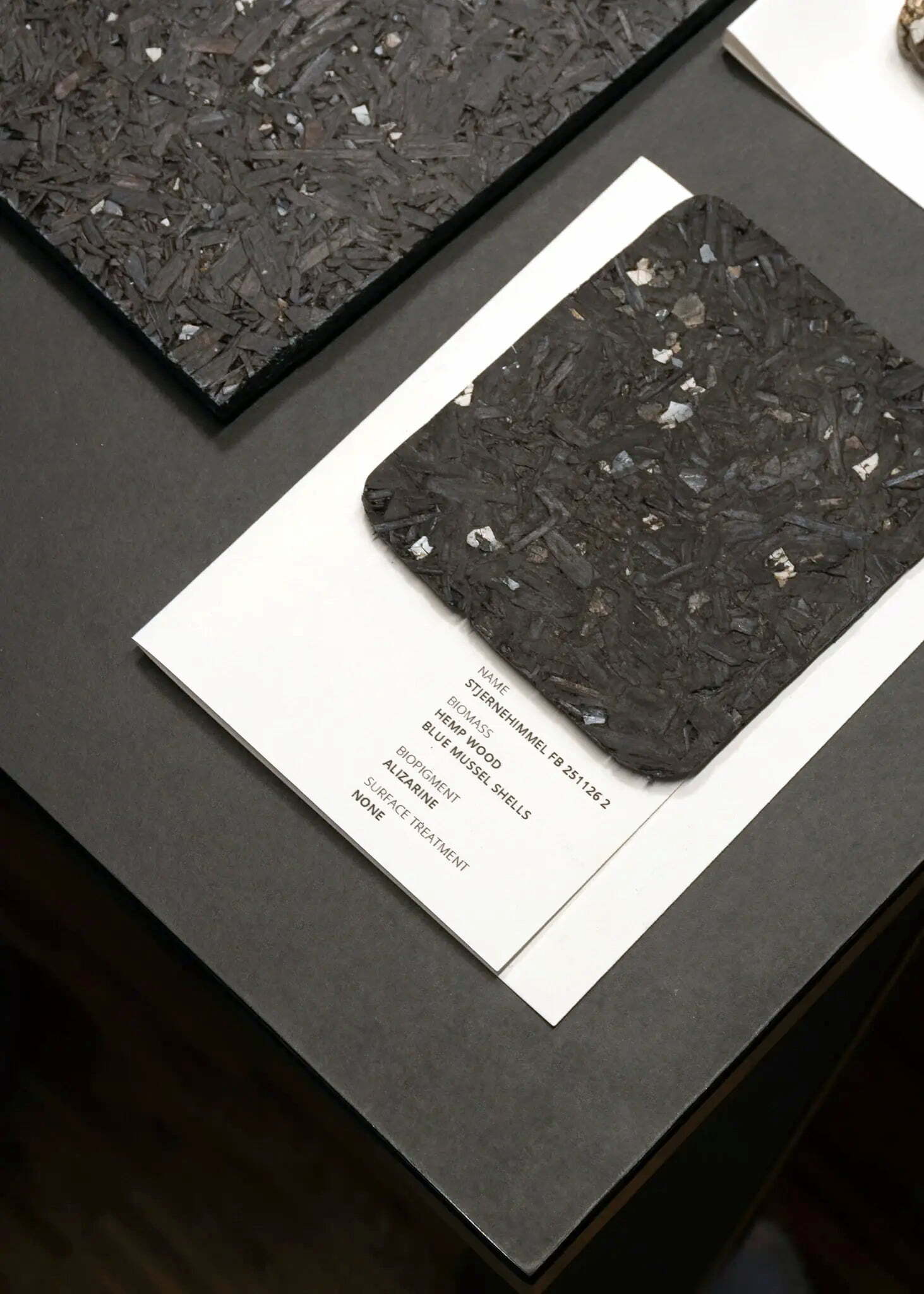
In collaboration with the Bioregion Institute, Flokk entered the workshop and got hands on with the materials. That meant creating a range of composites, mixing the selected bio-waste options, pressing them into panels and treating them with different biodegradable finishes. This work was as fascinating as it was messy, and everyone was curious to see what the panels would reveal.
Birgitta Ralston, Head of Design and Founding Partner of Bioregion Institute; "Multiple iterations between organic fillers, biobinders, mechanical processing and heat pressing help fine-tune the composition to reach a desired quality. Our work is to find an equilibrium between function and expression, while shaping the aesthetics of a fossil-free chair."
The Results
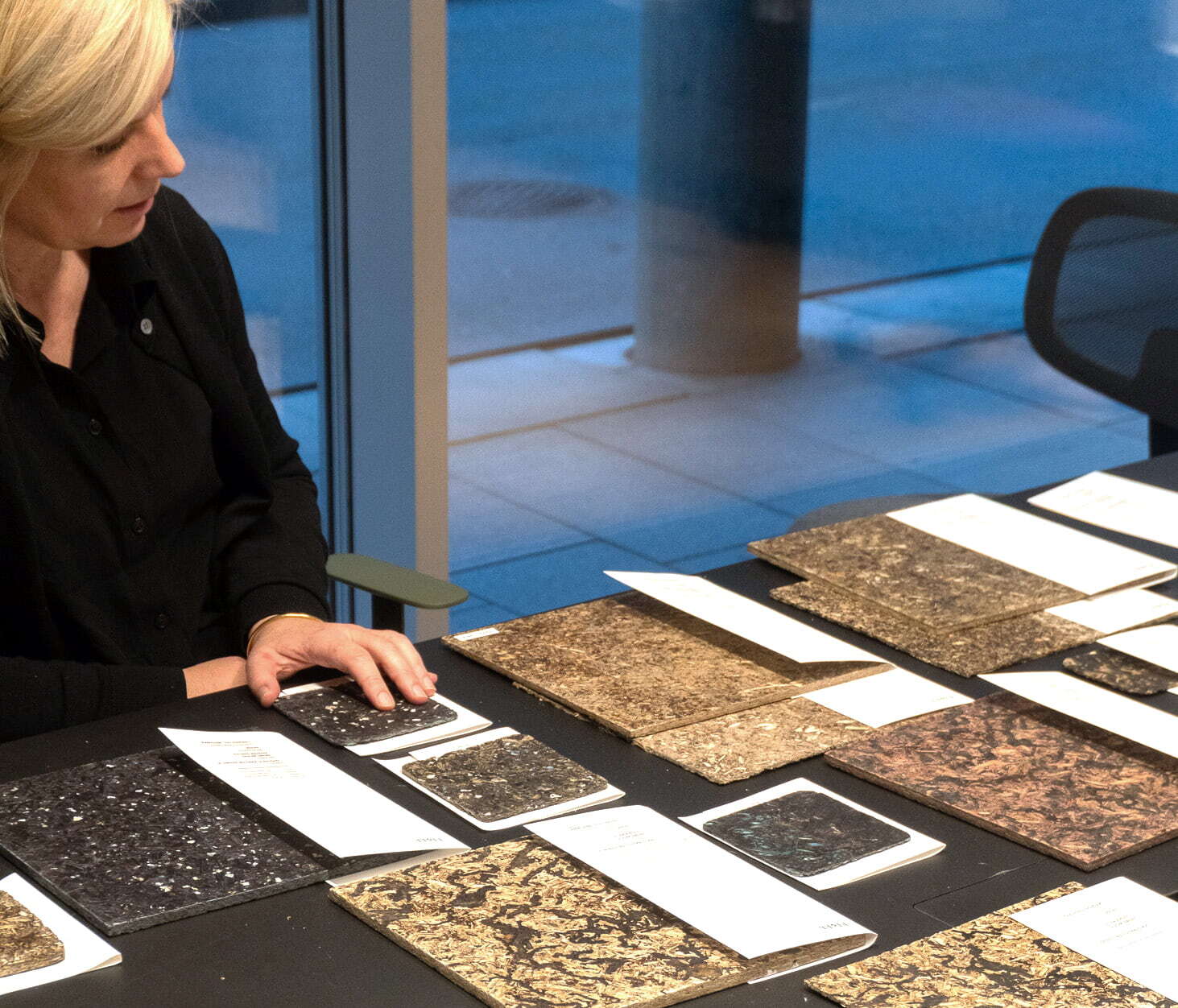
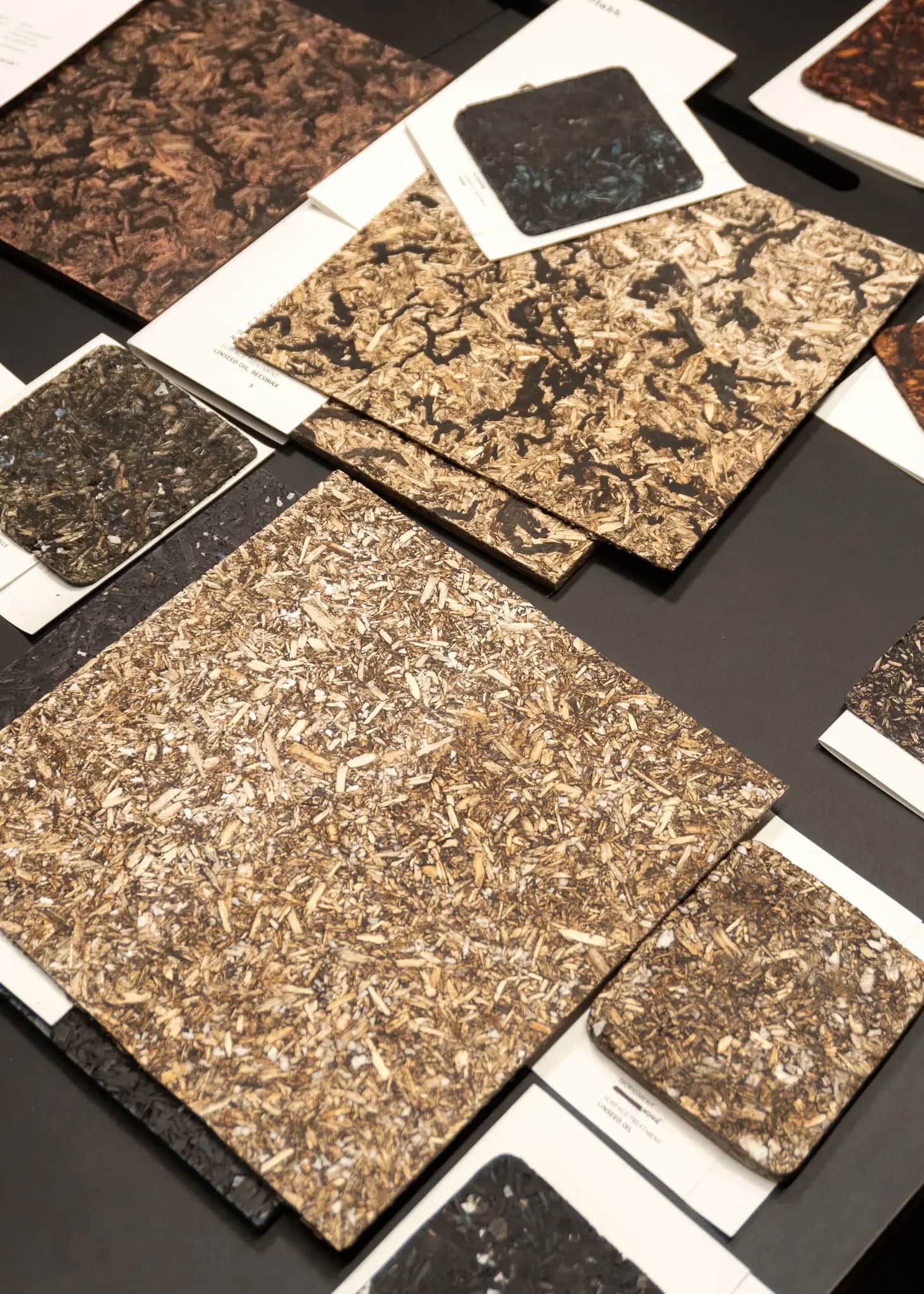
Examining the finished prototypes, some materials were light and fibrous. Others were dense or granular. Colours shifted depending on composition. Surfaces responded differently under pressure. The pressing process sometimes compacted evenly, sometimes with subtle irregularities.
With these first prototypes, the aim was not to create finished components, but to observe. To understand how the materials respond when shaped in ways that begin to resemble furniture components, especially visible ones such as backrests.
This visibility is a crucial element because unlike fossil-based plastics, which are engineered for uniformity, biological waste materials carry visible traces of their origin. Chairs within a batch will not look identical, and between batches, tone and texture may shift depending on the input material. The question is not how to eliminate that, but how to work with it in a way that adds value to the final object.
Marianne Sælid, VP Design Management Flokk Design: "Variations are inherent to all living materials, due to seasonal effects on the raw biomaterial inputs. When we embrace these irregularities as a value in the industrialised product, a whole new story unfolds. The chair becomes an expression of a bioregional locality and its weather, connecting us to the very nature, we as humans, are all a part of."
Flokk has encountered this before. Recycled plastic sourced from snowplough marker poles, for example, carries subtle shifts in colour depending on the recovered mix. The result is not perfectly uniform, and that difference gives it character.
Working with these new materials revealed similar qualities. Differences in tone, texture and surface feel produced panels that were tactile and distinctive. They do not imitate plastic. They express something else entirely. That difference is noticeable, and in many cases, makes the material more interesting to both see and touch.
This stage did not result in a final material decision. What it did was turn evaluation into direct experience. The materials were no longer abstract concepts. They had been handled, tested and understood in a tangible way.
The next step is further testing and validation. This includes durability, quality control and exploring how these materials could integrate into existing manufacturing processes across the Flokk portfolio.