Plastic dominates modern furniture for obvious reasons. It works. It’s durable, predictable and cost-efficient to mould. When you’re manufacturing at scale, that reliability really matters. Which is exactly why changing materials is not a simple task. Any alternative is expected to meet the same intense demands. That’s the reality.
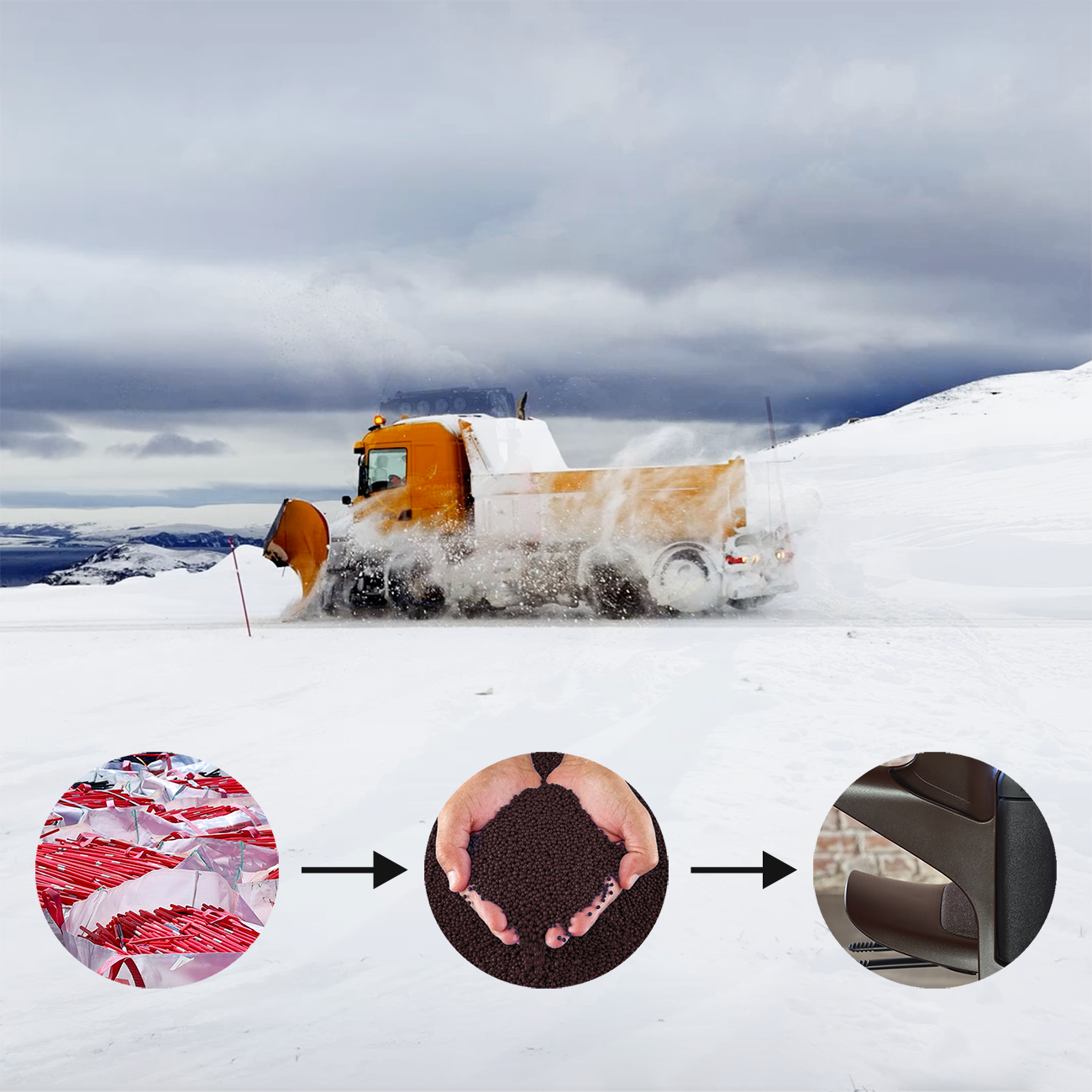
Over the past years, Flokk has focused on improving how plastic is used. More than 1,000 tonnes of recycled plastic are incorporated into our products annually, lowering CO₂ impact and reducing reliance on virgin fossil resources. In some cases, we have even been directly involved in sourcing the material ourselves, such as snowplough marker poles; plastics that have already served a long and demanding life before being reintroduced into furniture.
That work remains important. Recycled plastic strengthens existing systems and makes better use of what is already in circulation. But improvement within the current system cannot be the only ambition. At some point, sustainability requires asking a more uncomfortable question: not just where a material comes from, but whether it should be any material at all… It is this difficult question Flokk has been actively exploring.
Speaking on the subject, Flokk VP Design Management Marianne Sælid "The material of a chair represents up to 90% of its total climate impact. As an industry leader, we see it as our responsability is to pioneer low impact materials. With materials from biobased sources and without fossile content, we can make healthy and regenerative products."
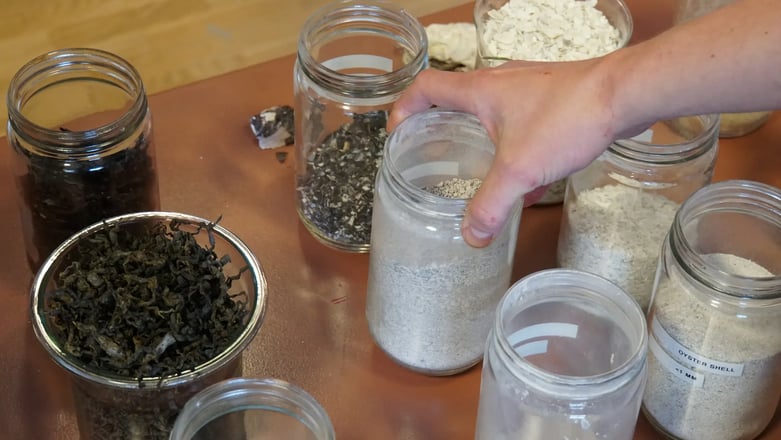
Rather than looking for quick fixes or novelty ideas, Flokk is examining whether organic waste streams, already existing as byproducts from food and fiber production at scale, could realistically be transformed into demanding components such as seat shells and backrests. The dynamic remains the same. If a material cannot perform, cannot scale or cannot integrate into production realities, it is not suitable.
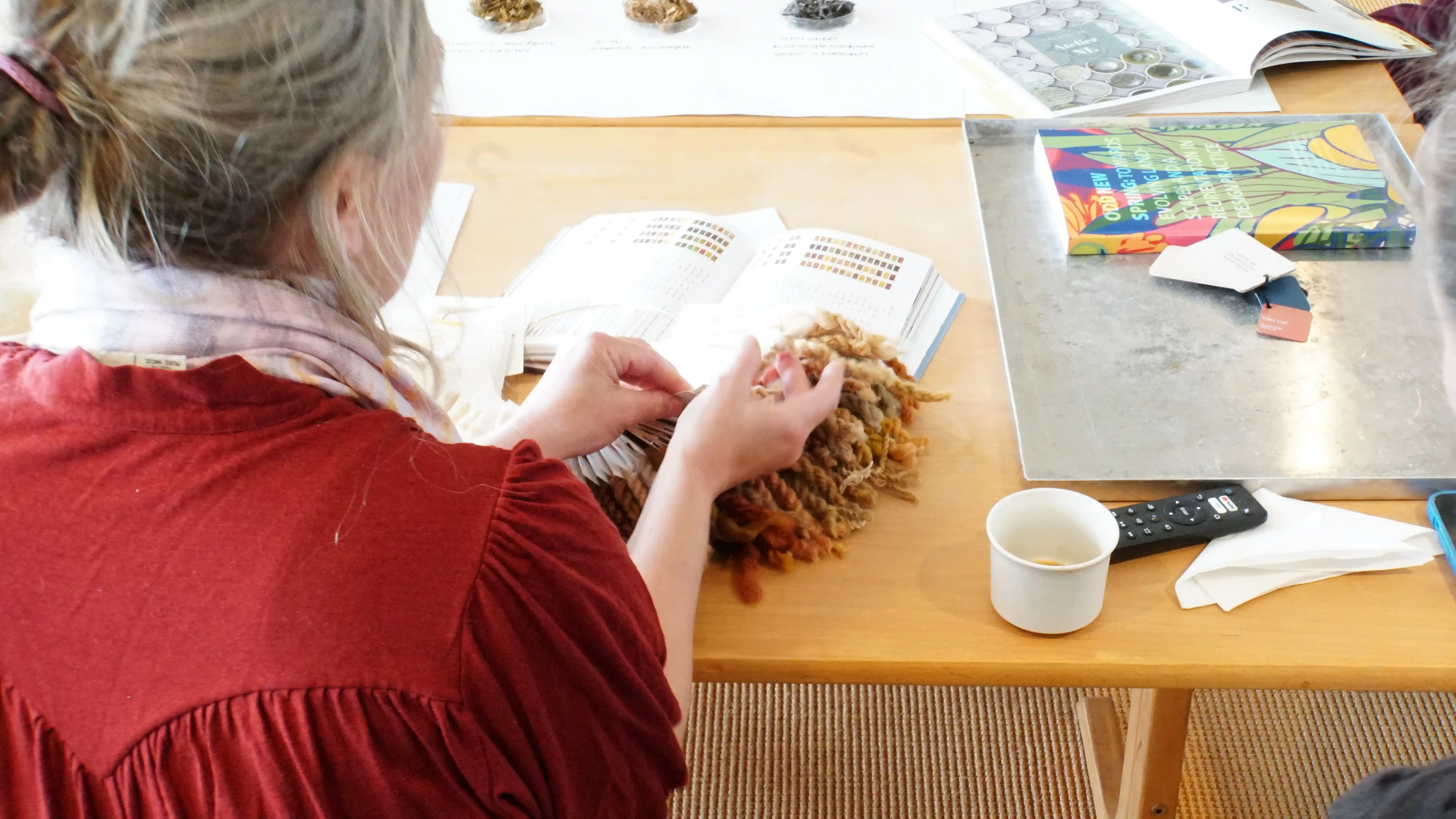
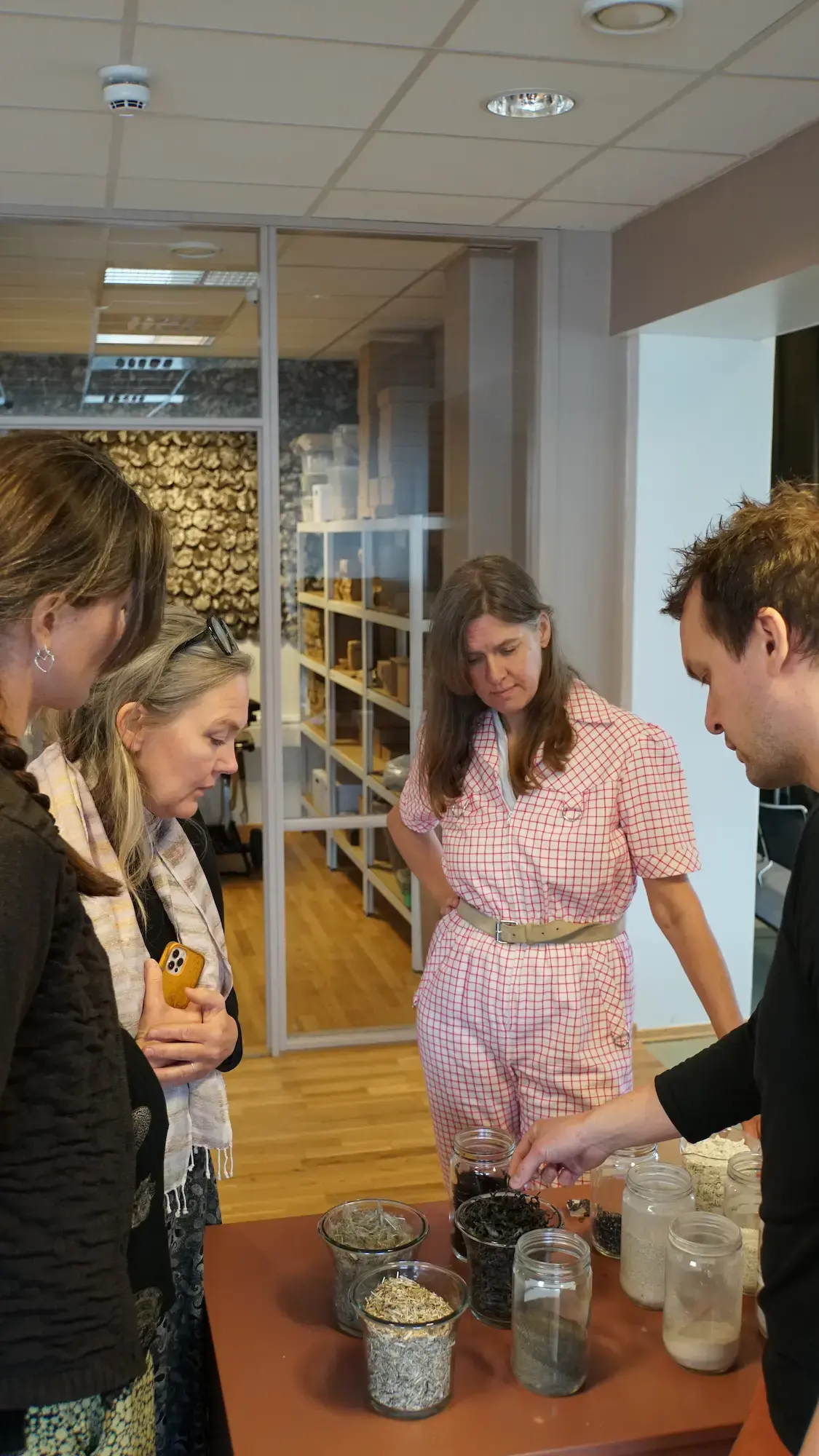
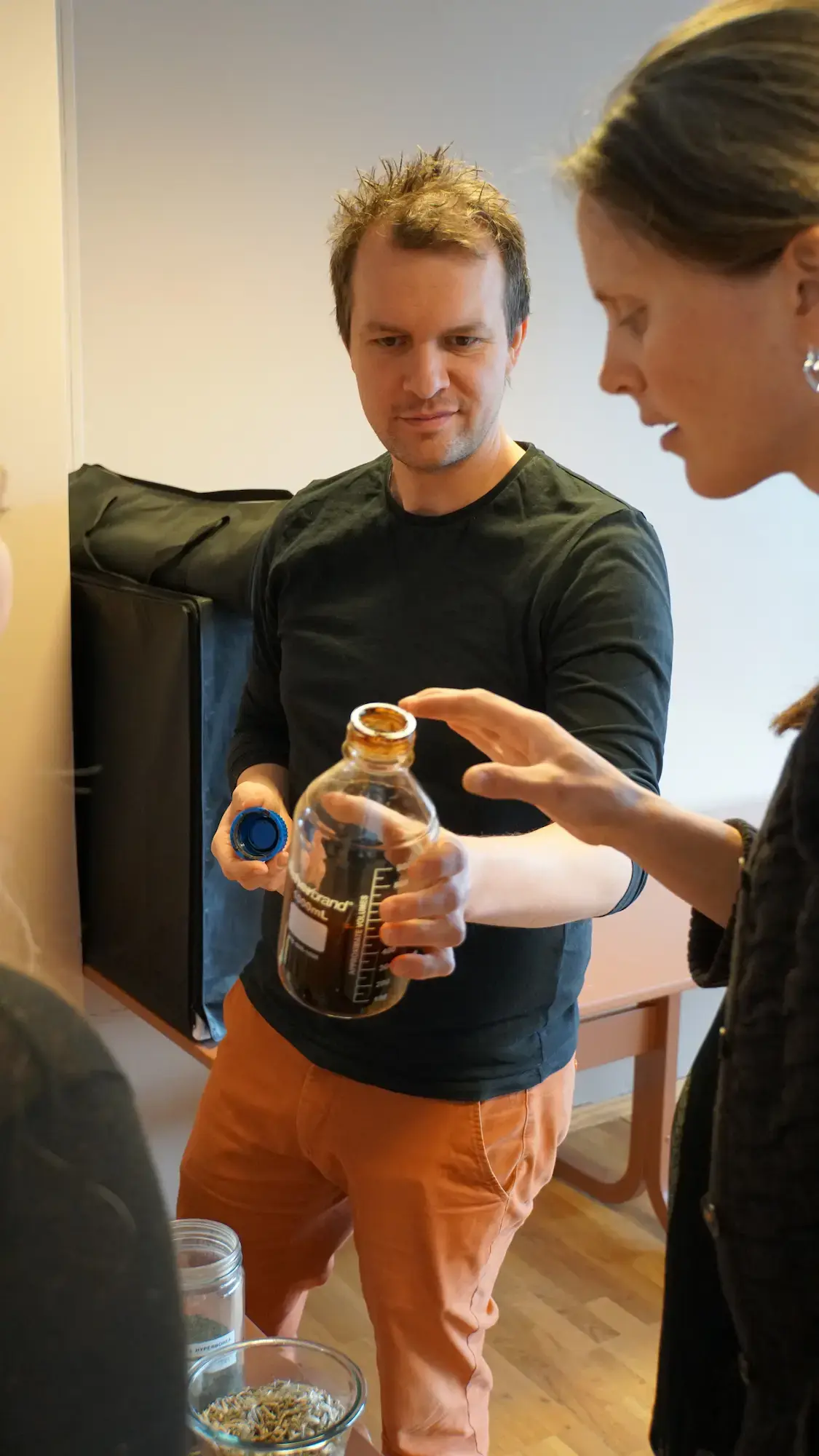
Working in collaboration with the Bioregion Institute, the focus has been on developing and refining different biobased material compositions. The project has centred on balancing biodegradability, aesthetic qualities and early indications of how these materials respond when pressed and formed.
Birgitta Ralston, Head of Design & Founding Partner of Bioregion Institute: "Biobased materials provide many aesthetic and sensorial possibilities and dimensions of place and time, that connect the product to localised bioregions and their biocircular systems. Each version of the chair comes out of an origin, with its colours and textures."
Exploring new materials does not replace the continued use of recycled plastic. It sits alongside it. Reducing impact today while questioning material systems for tomorrow is part of the same responsibility.
Article 2 : Beyond plastic: What would future furniture materials need?
Article 3 : Beyond plastic: Creating prototype materials for future furniture design