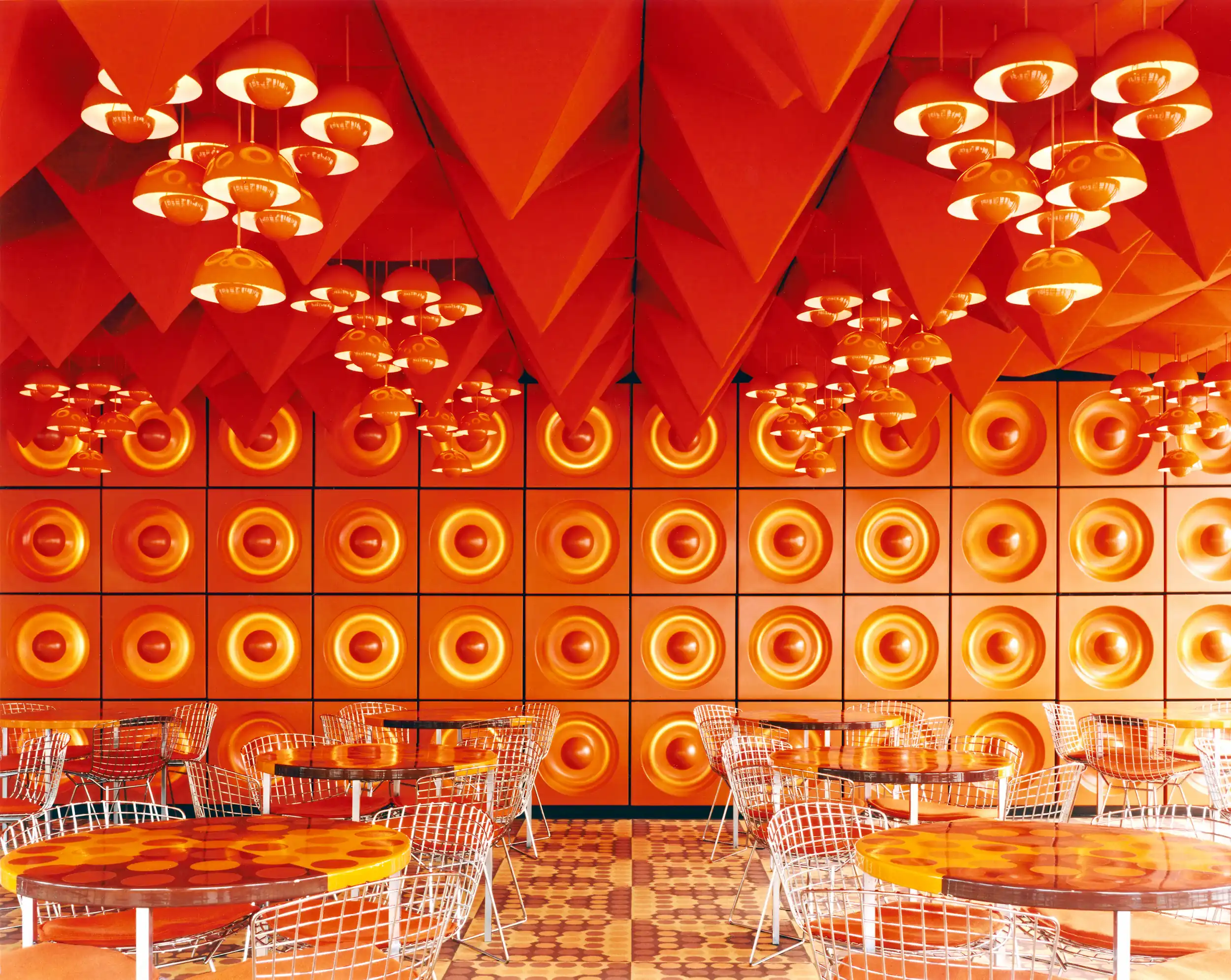
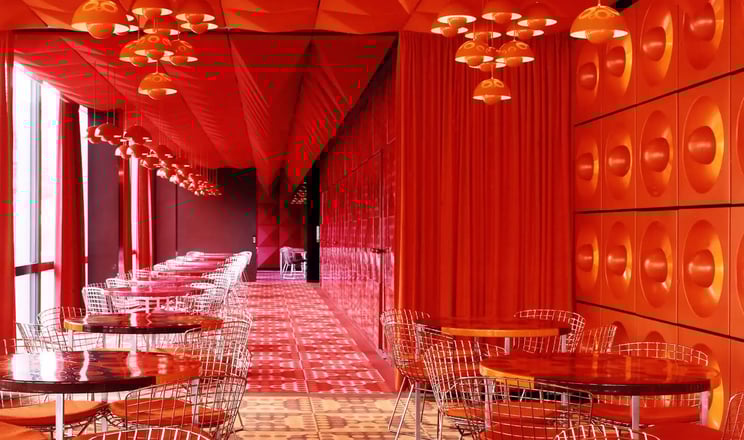
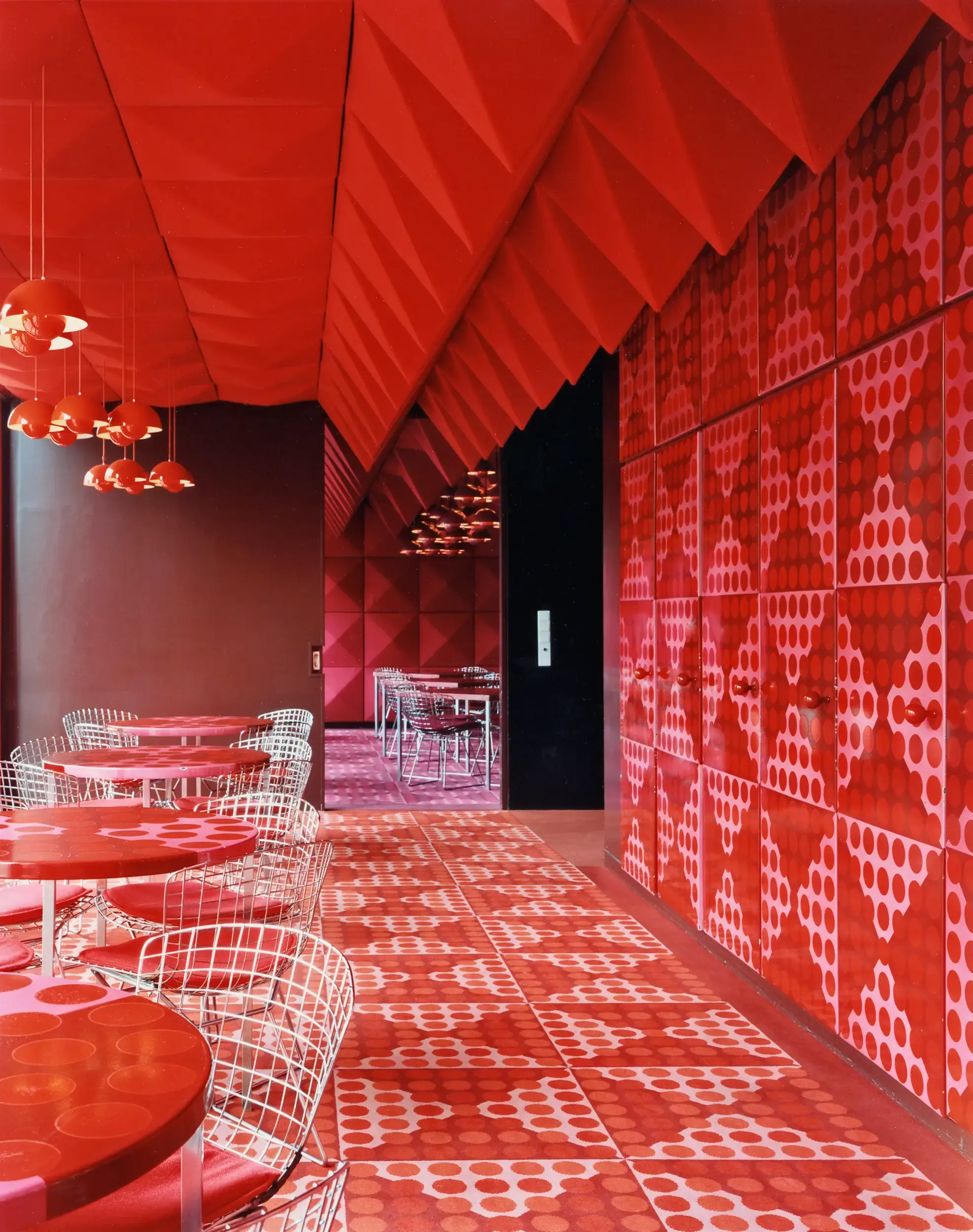
Offecct will soon reintroduce the Spiegel ceiling panels, an acoustic design by Verner Panton, originally created for the Spiegel publishing house in Hamburg in 1969. Defined by their distinctive sculptural, spiked form, the panels were developed to shape both the visual identity and acoustics of the space.
The panels formed part of what is considered one of Panton’s most ambitious interior projects. One of the most influential designers of the 20th century, he was responsible for the design of the entire building interior. Known for his psychadelic pop-art work, he was briefed with creating a radical alternative approach to what an office could look like.
At the time, most workplace interiors were designed for efficiency and uniformity. Panton took a different approach, using bold colour, form and materials to create a more expressive and immersive environment. Within this context, the ceiling became a defining element.
Rather than treating it as a passive surface, Panton used the panels to create a strong architectural feature. Their sculptural form helped manage sound in a busy canteen while also giving the space a distinct character. This combination of function and expression was highly unconventional at the time.
Today, only parts of the original Spiegel project remain. Due to later renovations, much of Panton’s work has been lost. The canteen and snack bar are among the few surviving elements, making the ceiling panels a rare example of his approach to interior design. Removed form it's original location in 2011, the canteen was painstakingly rebuilt in the Museum of Arts and Crafts Hamburg, a permanent exhibition allowing future generations to experience the interior.
As workplaces continue to evolve, the role of acoustic solutions has expanded. They are no longer purely technical, but contribute to how a space looks, feels and performs.
The reintroduction of the Spiegel panels brings this thinking back into a contemporary context, reconnecting a historically significant design with the needs of today’s interiors.
More details will be shared soon.