Not all ergonomic chairs are the same. This article explains the principles that define good ergonomic design and how they shape the way a chair supports real work.
Ergonomics is often associated with health; how we sit, how we avoid discomfort, and how we reduce strain At its core, however, it is about arranging the things we use so that people can interact with them safely, efficiently, and with minimal strain.
When we describe an office chair as “ergonomic”, we are referring to how well it supports the body during everyday work. This includes how it responds to different tasks, how it allows for movement, and how it helps maintain comfortable, balanced positions over time.
Ergonomic seating is often assessed in terms of features. What can be adjusted, how much variation is possible, and what types of support are included, such as lumbar support, armrests, or headrests.
However, these features are only meaningful in terms of what they are designed to do. Not every user, or every situation, requires the same level or type of adjustment. The presence of more features does not necessarily result in better ergonomics.
This article, therefore, does not present a checklist of features. Instead, it looks at the underlying principles behind them, why these elements exist, and how they contribute to comfort, movement, and performance over time.
Understanding these principles makes it easier to recognise what matters in practice, and to identify solutions that genuinely support the way you work.
In office seating, ergonomic design can be understood through four key principles:
Each of these plays a distinct role. Together, they describe how seating performs in practice, not as a collection of features, but as a system that supports comfort, reduces strain, and enables effective work throughout the day.
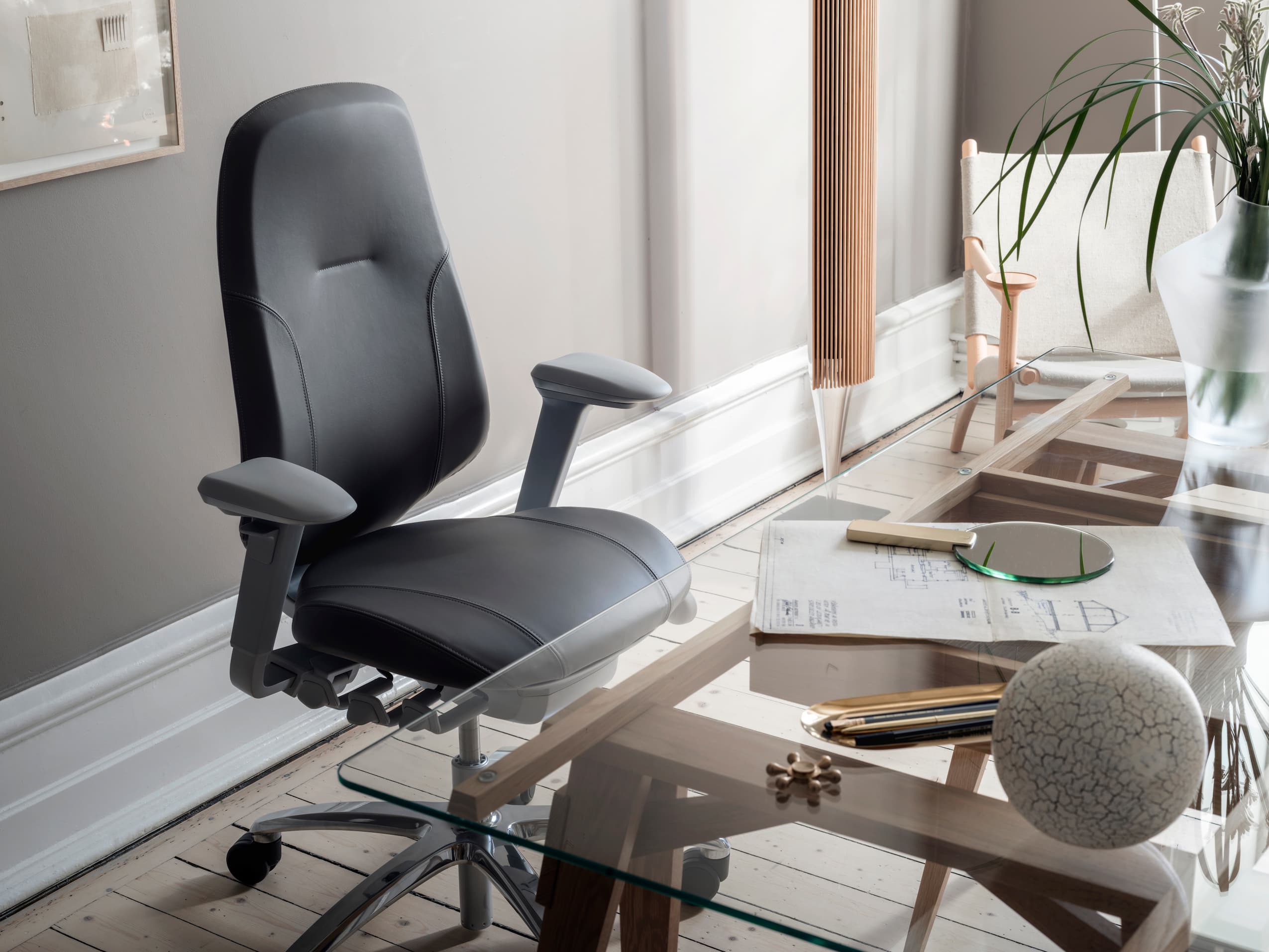
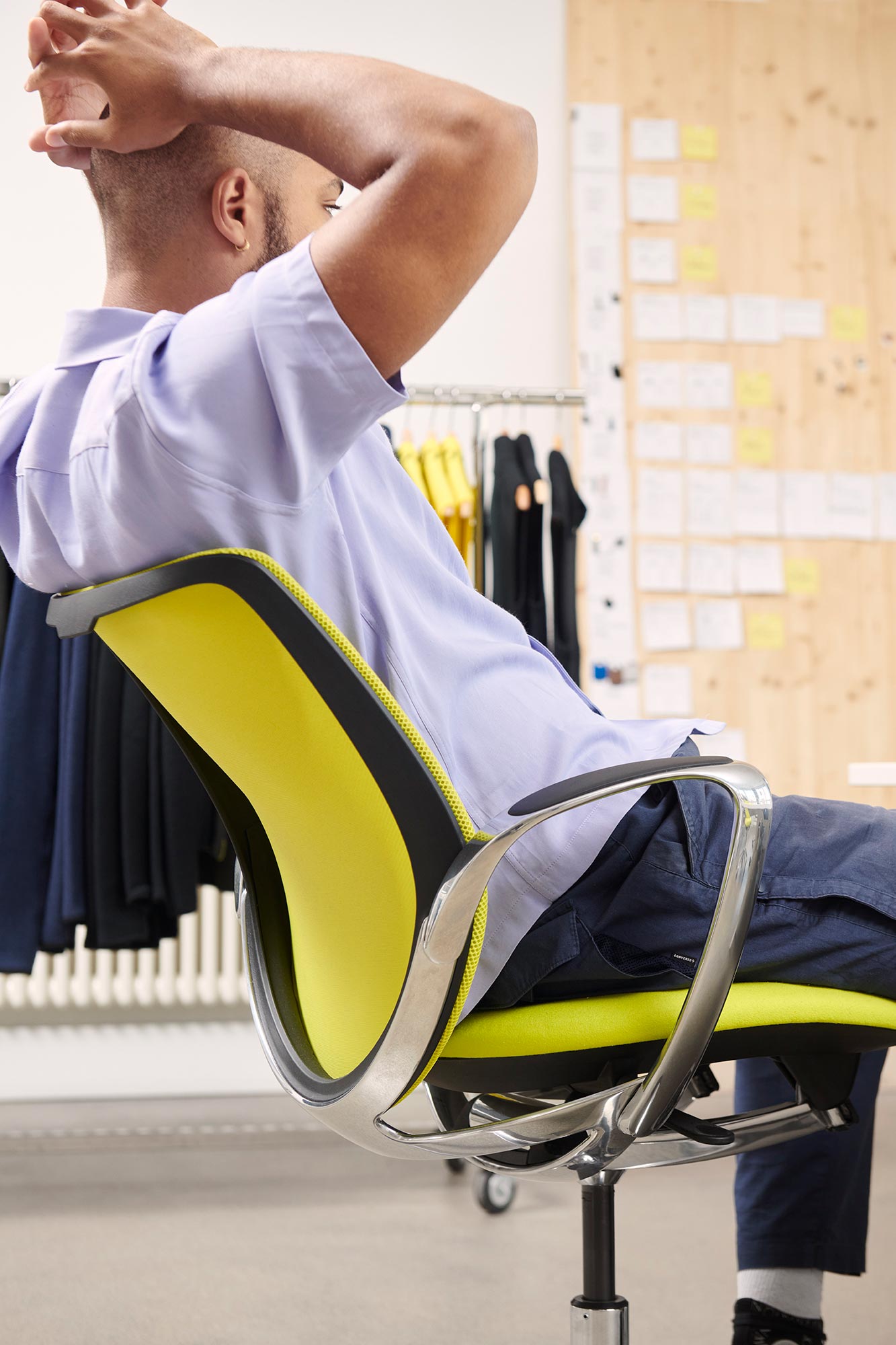
RH Mereo: High levels of adjustment allow for a more refined, individualised setup, particularly suited to extended use.
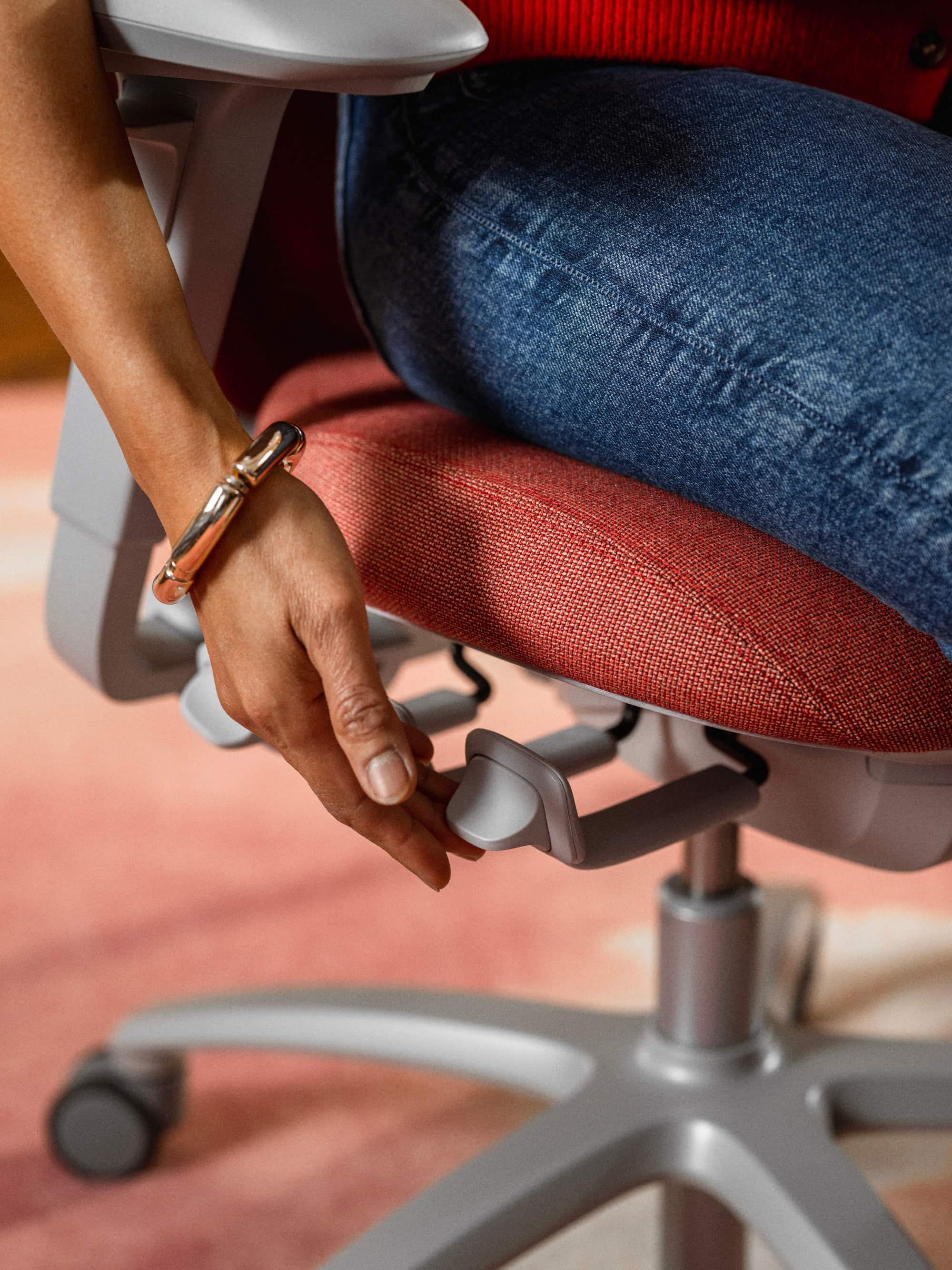
People differ in height, body proportions, and how they prefer to work. A fixed seating position cannot always accommodate this variation. Adjustability allows a chair to respond to the individual, rather than requiring the individual to adapt to the chair.
In practice, this means being able to modify key aspects of the chair - such as seat height, seat depth, backrest position, and armrest placement - so that support can be aligned with both the user and the task.
However, adjustability is not simply about the number of features available, nor is it always about ease of use alone.
In some environments - particularly shared or flexible workspaces - intuitive and easily accessible adjustments are essential, allowing users to adapt the chair quickly to their needs.
In other situations, particularly where seating is used by a single individual over longer periods, a higher level of refinement may be required. This can involve more precise adjustments, and in some cases a more considered setup, to ensure the chair is properly adapted to the user’s body and working patterns.
More adjustment does not automatically mean better ergonomics. What matters is how well the level and type of adjustability matches the context in which the chair is used.
When adjustability is well designed, it allows seating to respond to both variation and specificity, supporting different users, different tasks, and different ways of working over time.
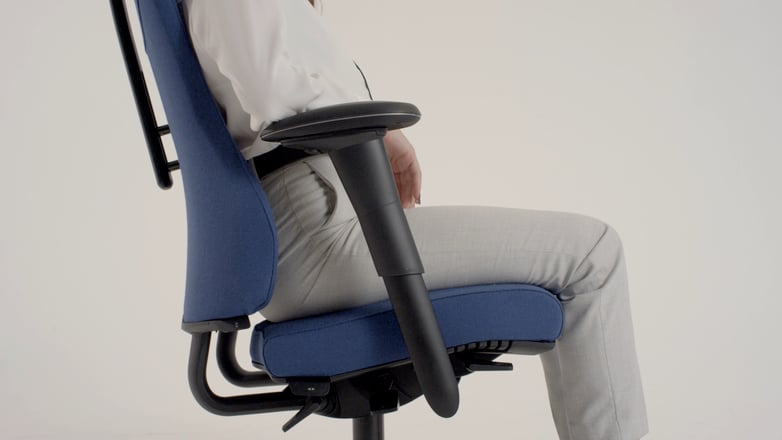
Supporting the body in a balanced and stable position is central to ergonomic design. This is particularly important for the spine, which needs appropriate support to maintain its natural alignment over time.
Effective postural support helps to:
However, postural support should not be understood as enforcing a single “correct” posture. In practice, people sit in different ways, and their needs vary depending on both the task and the individual.
Some users require more structured, consistent support, particularly during long periods of focused work. Others prefer a lighter level of support that allows for more freedom in how they sit.
The aim is not to enforce a single “correct” posture, but to provide a level of support that suits the user and the way they work.
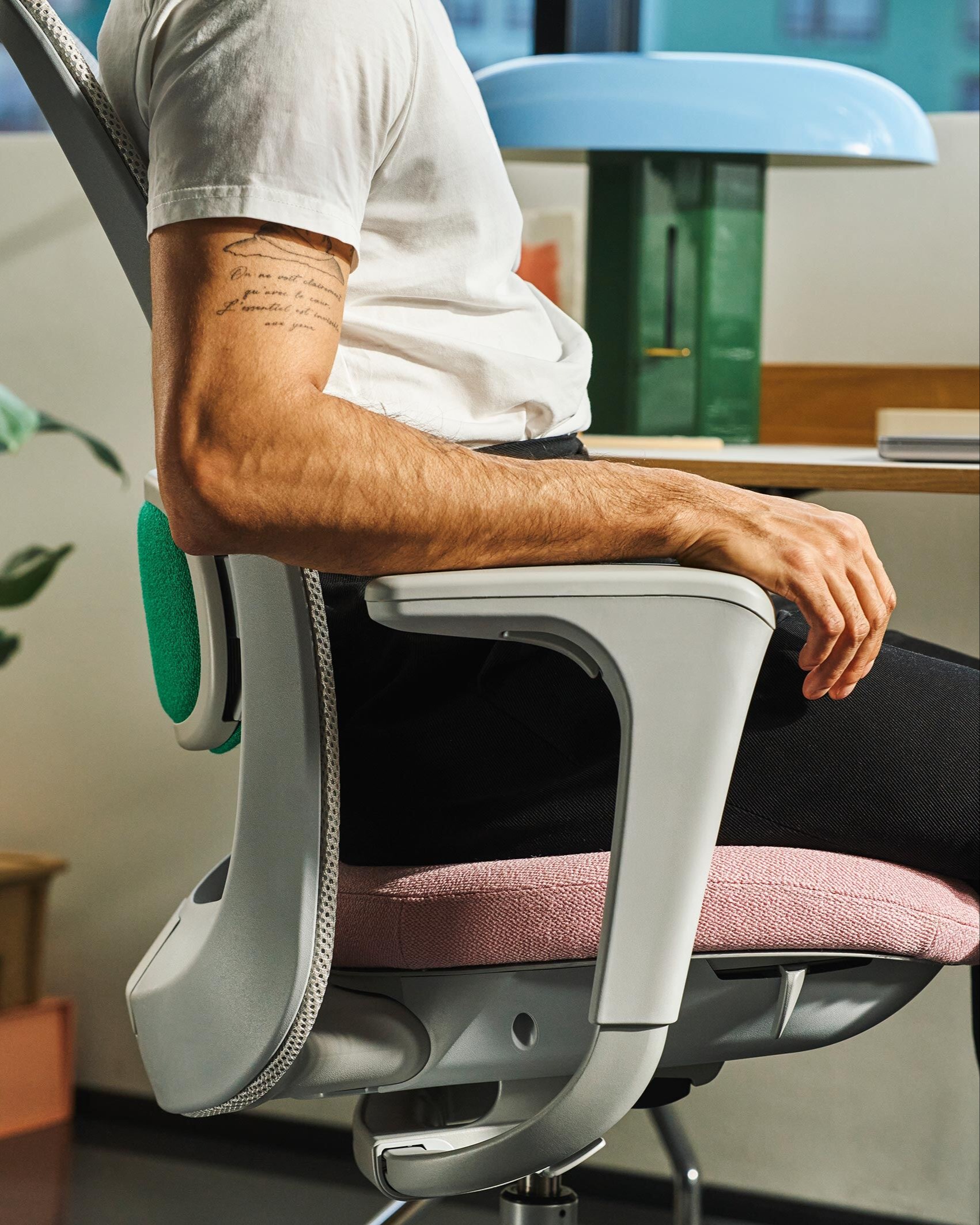
Sitting in one position for extended periods can place stress on the body and contribute to fatigue over time. For this reason, movement is an important part of ergonomic design.
Over time, people naturally shift, adjust, and change how they sit in response to different tasks, levels of focus, and periods of use.
Good ergonomic seating should support this natural variation, allowing the body to move between positions rather than remain in one for extended periods.
Chairs that support movement enable users to:
This movement does not need to be large or deliberate. Much of it happens through small, continuous adjustments as people respond to their work throughout the day.
The aim is not constant movement, but avoiding prolonged stillness. Supporting movement allows the body to remain engaged over time, rather than becoming static.
When well integrated with adjustability and postural support, movement contributes to a more adaptable and responsive seating experience, one that better reflects how people actually work.
Work is rarely uniform. Focused desk work, short tasks, and more dynamic activity all place different demands on the body.
For this reason, ergonomic seating should not be defined by a single configuration. Instead, it should support the way the chair is actually used.
Task fit describes how well a chair aligns with the type of work being carried out. This may involve:
Importantly, task fit also influences how the other principles are applied.
The level of adjustability, the amount of postural support, and the need for movement will all vary depending on the task and the individual using the chair.
Rather than applying each principle in the same way, good ergonomic design balances them according to the situation, supporting the body in a way that reflects how people actually work.
Understanding these principles provides a clearer way to evaluate seating, but their value comes from how they are applied in real situations.
In practice, this means looking beyond individual features and considering how a chair will be used. The right balance of adjustability, support, and movement will depend on the task, the duration of use, and the individual.
This is why ergonomic design cannot be reduced to a checklist of features. The same chair may perform very differently depending on how it is set up, how it is used, and the context in which it sits.
In practice, this means approaching ergonomic seating by asking a small number of focused questions:
These questions provide a practical way to apply ergonomic thinking, helping to move beyond features and towards solutions that genuinely fit how people work.
Ergonomist Rebecka Ullholm explains what mesh backrests offer from an...
Ergonomist Rebecka Ullholm shares what most companies get wrong about...
Discover the origins of the Axia chair, developed by BMA Ergonomics in the...